

Weekend Waves 09/26
🧩 IP as the Platform

Happy Friday, Wavemakers!
The biggest challenge in media isn’t producing the next hit show, it’s keeping audiences engaged across platforms. The solution? Treating your IP not as a single product, but as a flexible, interactive ecosystem.
Here are the top stories making waves this week:
1️⃣ ITV Studios Launches Studio 55
2️⃣ Scaling Premium TV on YouTube
3️⃣ Chat Becomes the Channel
Let’s dive in!
🌊 News that Made Waves
ITV Studios Launches Studio 55 & Opens Up Library To Content Creators.
ITV said it will give brands and creators “unprecedented access” to its IP with a view to creating new and next-generation content under the auspices of a new label, Studio 55. Studio 55 will be led by Will Scougal, ITV Studios’ newly appointed EVP of Brand & Commercial Partnerships and a former exec at Snapchat and X. ITV Studios said its activities will be two-fold. It will match brands, marketing agencies and content creators with ITV Studios’ archive of shows to originate digital-first formats. It will also act as a hub for licensing ITV brands such as Love Island and The Voice for consumer products, fan experiences and other commercial activity. (Deadline)
💡ITV Studios is signalling that the future value of TV isn’t in commissioning the next hit show, but in turning existing IP like Love Island and The Voice into modular building blocks for the creator and brand economy - and I whole-heartedly agree!
A New Teenage Mutant Ninja Turtles Series is Launching on YouTube.
Kids’ content is increasingly being pushed straight to YouTube, and the Teeny Mutant Ninja Turtles series will follow baby Leo, Donny, Mikey, and Raph as they train to be ninjas in 30 four-minute-long episodes. Like Disney’s Spidey and His Amazing Friends, the Teeny series will introduce the turtles to a younger audience with more kid-friendly storylines - and since we know that the next gen is watching their content on YouTube and YouTube Shorts, it’s a wise place to launch. The move also comes at a time when popular fictional characters like Sonic the Hedgehog are being mashed together with different creators and IPs in “kidslop” videos that make little sense but are colourful and eye-catching. Paramount isn’t just amping up their TMNT strategy with littles though; they’re also planning a new toy line, books, a TMNT-themed pizza chain, and the sequel to Mutant Madness has been pushed up to August of 2027. (Tubefilter)
💡By launching a preschool-focused Teenage Mutant Ninja Turtles directly on YouTube, Paramount is acknowledging that for Gen Alpha, the platform isn’t just a marketing channel for TV, but the primary network where franchises must live early to secure long-term IP relevance.
Tubi UK Surges To 75,000 Titles As Gen Z & Millennials Drive AVOD Expansion.
Tubi says its AVOD offering is now the largest in the UK a year-and-a-half after launch. The Fox-owned free streaming service shared figures with Deadline showing its UK lineup now numbers almost 75,000 movies and TV episodes, more than triple the number it went out with when it bowed in the UK in 2024. Tubi has been taking UK rights to shows from AMC, Lionsgate, NBCUniversal and Sony among others. Its lineup of titles branded exclusive in the UK include YA hit Sidelined: The QB and Me. It spawned a sequel Sidelined 2: Intercepted, which was an original for Tubi and hit number one in its UK’s viewing charts. The AVOD said half of the viewers to that film were new to its service. Other originals include the movie Kissing is the Easy Part, which dropped ahead of Valentine’s Day. (Deadline)
💡Tubi’s rapid UK expansion shows that AVOD is no longer a secondary window for leftovers, but a primary growth strategy where free access plus youth-skewing originals can actively acquire - not just monetise - the next generation of viewers. I recently explored this shift in my latest MIPBlog article, and I’m sharing an excerpt further down in this newsletter.
Nat Geo Aims to Build ‘Next-Gen Creator Ecosystem’ With Digital-First Initiative.
The Disney-owned company on Wednesday unveiled its inaugural Creator Cohort campaign, a six-month programme that brings together eight creators from across conservation, wildlife, science, history and photography whose “storytelling aligns with National Geographic’s longstanding commitment to science and global understanding, as well as the exploration and protection of our natural world.” The first group includes conservationist and influencer Maya Higa, who founded the non-profit exotic animal sanctuary Alveus; Canadian environmental educator Macaila Wagner; science-focused entertainer Maynard Okereke, who fronts the Hip Hop Science channel on YouTube; and geology influencer Ethan Penner. Also among the first cohort is adventure traveller Jordan Kahana, geoscientist Tanya Badillo, landscape and travel photographer Paige Tingey and archaeologist and art historian Dr Tenninger Kellenbarger.
Nat Geo said the initiative will give the participants access to resources that will enable them to expand their audience, as well as receiving mentorship from exec and talent from within the Nat Geo ecosystem. The goal of the programme, it said, is to build a “next-generation creator ecosystem” designed to “reinforce its position as the definitive home for science, exploration and adventure storytelling,” at the same time as building long-term relationships with talent from the creator economy. (C21 Media)

💡By launching a Creator Cohort, National Geographic is signalling that legacy brands can no longer rely solely on commissioning documentaries, they must embed themselves inside the creator economy to remain the cultural authority for science and exploration in a platform-native era.
FIFA Bought a One-Way Ticket to Being Roblox’s Top Branded Game.
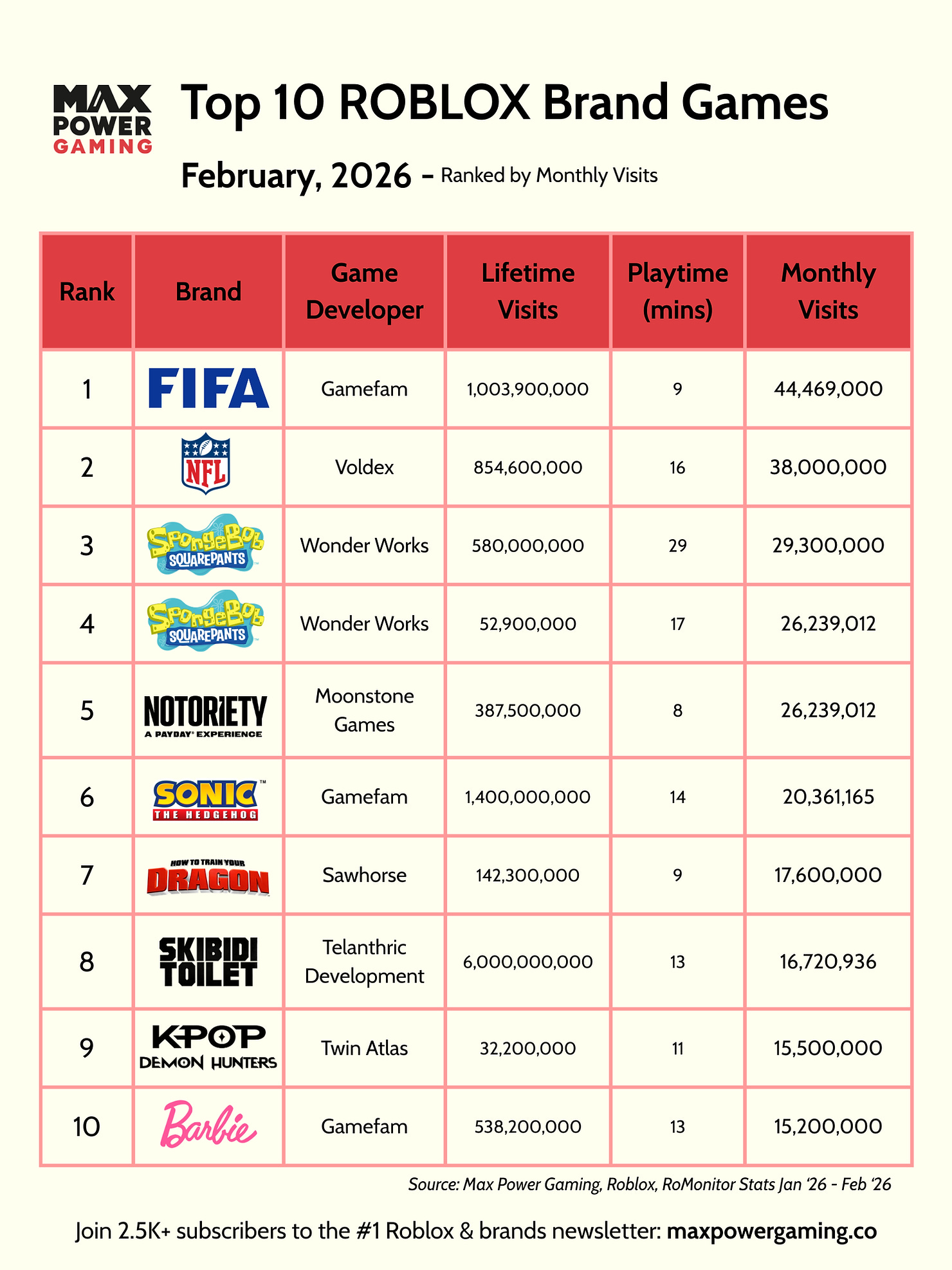
While user-made mini games dominate Gen Z’s time on Roblox, FIFA took the route of purchasing and rebranding the existing “Super League Soccer” to shoot themselves to the top of the branded games list. The game already averaged nearly 10M monthly users and 1.5M daily plays - but in January alone, it had 44M visits under the new name. This isn’t FIFA’s first time in Roblox - their 2022 World Cup activation drew over 26M visits - but it’s a deeper integration that’s yielding more engagement, especially ahead of the highly anticipated 2026 World Cup. Other brands have taken this same path of purchasing an existing game, including NASCAR and the NFL, the latter of which has the second most-visited game this month. While essentially side-stepping building up a brand-new game, this strategy is proving to create more permanent brand visibility in one of Gen Z’s favourite games. (Max Power Gaming)

💡By acquiring and rebranding an existing hit inside Roblox, FIFA shows that in platform-native ecosystems, buying embedded attention can be far more powerful than building branded experiences from scratch.

📈 Scaling Premium TV on YouTube: The New Frontier for AVOD Revenue
YouTube is no longer just a promotional outlet for TV, it’s becoming a primary distribution window for premium content.
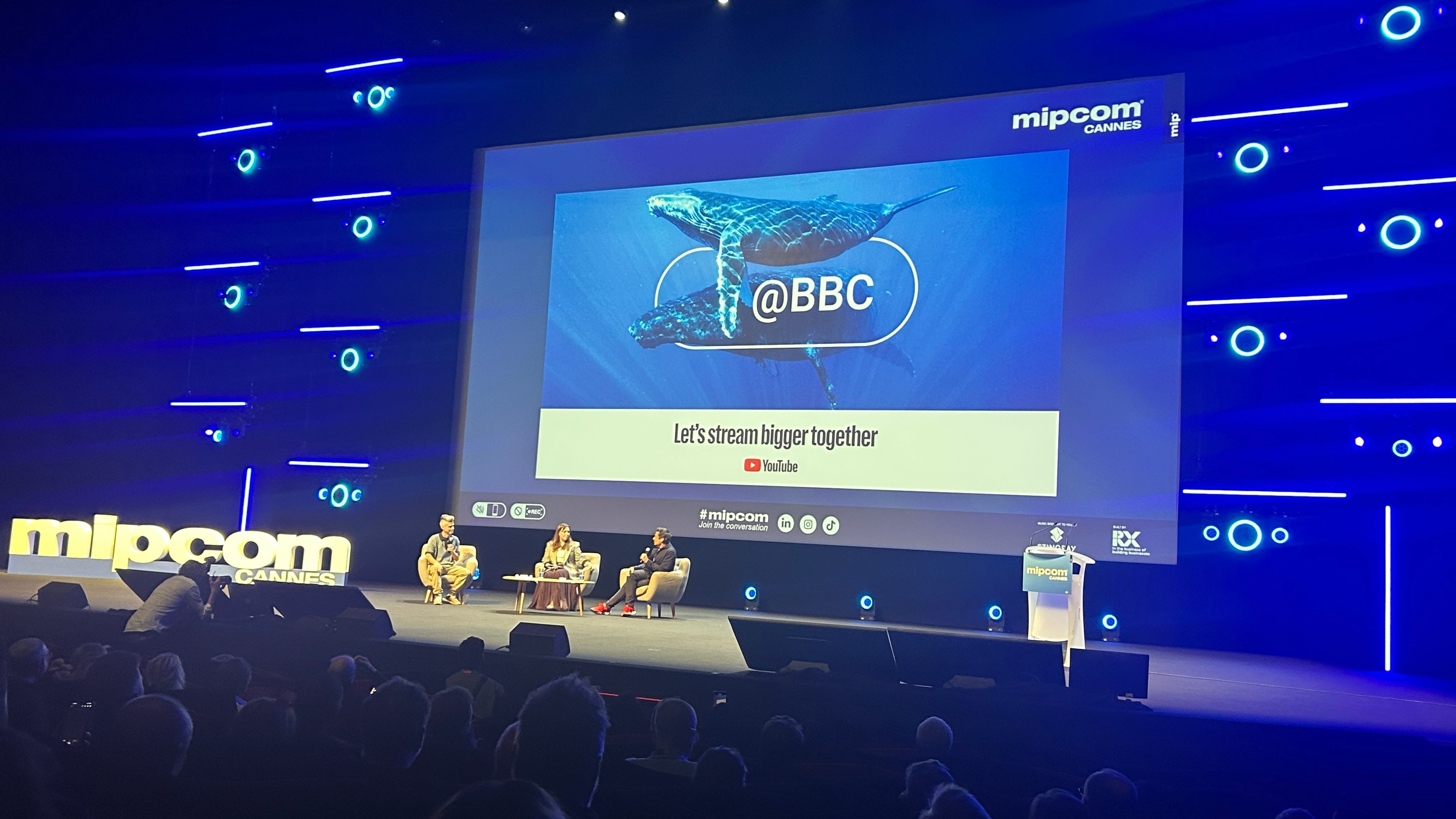
At MIPCOM, BBC Studios’ Jasmine Dawson highlighted a quiet but profound shift: social-first sales teams. That may sound operational, but it’s structural. Platforms like YouTube and Facebook now dominate the global media ecosystem, especially on the TV screen, turning AVOD into a defined revenue stream rather than a side channel.
The challenge? Discoverability. Millions of videos are uploaded every hour, and simply having content online isn’t enough. Companies like Merzigo are treating YouTube like a broadcaster, applying programming schedules, optimising for watch time, and localising content across languages - all while managing thousands of channels and hundreds of thousands of hours of video. The payoff isn’t just views; it’s structured monetisation, data-led optimisation, and audience retention at scale.
This isn’t limited to library exploitation, though. Premium content is increasingly being commissioned for YouTube first, with original series like the Arabic reality show Qesma W Naseeb demonstrating how episodic programming, audience data, and monetisation can be integrated from day one. Broadcasters and Branded Entertainment teams now face a strategic imperative: treat AVOD with the same discipline as linear and streaming, or risk leaving revenue and engagement on the table.
I’ve broken down all of this in my latest MIPBlog article, with insights from Merzigo, BBC Studios, ITV, and industry case studies. Read it HERE.
👀 Format Migration Watch: Chat Becomes the Channel
OpenAI and JioHotstar are tackling streaming’s biggest bottleneck: Discovery.
With nearly half a billion monthly users, JioHotstar is embedding a ChatGPT-powered assistant that lets viewers describe moods, situations, or personality quirks instead of scrolling endless menus or typing keywords. The AI responds with tailored recommendations and direct links, turning content discovery into a conversational experience.
I actually wished for something like this last month when I was sick - I wanted to be able to tell Netflix how I felt and what shows I was craving, instead of scrolling endlessly.
But this isn’t just convenience, it reframes discovery as an interactive layer of storytelling. Users can even access live sports insights, player stats, and highlights in real time through conversation. The AI mediates the connection between audience and IP, making the interface itself a dynamic platform for engagement.
💡 If discovery is the choke point for streaming growth, AI could be the key to solving it. By understanding intent rather than relying on traditional menus, services like JioHotstar may finally bridge the gap between massive content libraries and meaningful viewer engagement, turning the act of finding content into its own immersive experience.
🧠 Strategy Spotlight: IP Becomes the Platform
This week, the news pulse makes one thing crystal clear: the real battleground in media isn’t who can produce the next hit show - it’s who can turn existing IP into a living, breathing ecosystem. Legacy studios, global brands, and even sports federations are pivoting from traditional commissioning models to embedding their IP across creators, platforms, and audience touchpoints.
Modularising Legacy IP: ITV Leads the Way
Look at ITV Studios and its launch of Studio 55. By opening its archive of shows like Love Island and The Voice to both brands and creators, ITV is effectively modularising its IP. Instead of locking these formats behind traditional linear schedules or premium windows, the studio is making them building blocks for a creator-driven ecosystem. A show is no longer a fixed product but a sandbox for new ideas, formats, and revenue stream - giving creators room to innovate and adapt content within ITV’s IP framework, while extending the IP’s reach. In essence, the IP itself becomes a platform for structured creativity and innovation.
Embedding in the Creator Economy: Nat Geo’s Talent Play
National Geographic is taking a similar approach, but through mentorship and collaboration with creators. Its Creator Cohort programme signals that even prestige brands must embed themselves in the creator economy to remain culturally relevant. By nurturing digital-native storytellers and aligning them with its own science and exploration ethos, Nat Geo is creating a talent pipeline that amplifies its IP far beyond traditional channels. In a world where audience attention is spread across platforms, this kind of embedded ecosystem becomes a form of cultural moat.
Platform-First Strategies: Kids and Sports
Sports and kids’ entertainment are applying the same principle. FIFA didn’t build a new Roblox experience from scratch, it acquired and rebranded an existing hit to embed its IP in the platform where Gen Z spends its time. Paramount’s Teeny Teenage Mutant Ninja Turtles series does the same on YouTube: the franchise is no longer confined to TV; it lives where the audience already is, in short-form, algorithmically discoverable chunks, paired with toys, books, and brand extensions.
Free Streaming as IP Accelerator: Tubi’s AVOD Play
Even free streaming is now a vehicle for IP-driven ecosystem growth. Tubi’s UK expansion shows that AVOD can do more than monetise, it acquires audiences for IP that lives across multiple formats. Originals like Sidelined not only drive viewership but also seed long-term fan engagement, reinforcing the IP’s presence outside of premium windows.
AI as Discovery Layer: Chat Becomes the Platform
And then there’s AI, which transforms the interface itself into an IP-aware platform. The OpenAI x JioHotstar experiment isn’t just about search; it’s about making content discovery conversational, adaptive, and emotionally intelligent. The audience no longer navigates a catalogue, the catalogue responds to them, putting IP at the centre of interaction.
💡 The future belongs to organisations that see IP as a flexible, living platform rather than a static asset. Success will not come from winning the next ratings cycle, but from embedding your IP so thoroughly into ecosystems that it becomes both discoverable and indispensable across formats, platforms, and audiences.
☀️ Weekend Vibes
If something sparked a thought, or you think a friend would enjoy this, hit reply or forward it along. Sandra x
Please feel free to reach out to me if you would like to discuss this further or if you have any questions: sandra@tvfuturist.com or connect with me on LinkedIn.
You can get the Creator Economy Playbook HERE
I’m excited at the potential creator reimaginings of old formats - I watched the Sidemen’s Family Fortunes and it was rather good