

Weekend Waves 17/26
📲 From Libraries to Loops

Happy Friday, Wavemakers!
I’m back from 2016 - not literally of course, but mentally.
After StreamTV Europe last week, I had the feeling the industry had finally caught up to ideas I’ve been working with for years. Then I went to Content Europe, and it felt like a time shift in the other direction - back into a more linear TV mindset. The contrast between the two wasn’t about new vs. old, but about how unevenly the future is being absorbed.
Here are the top stories making waves this week:
1️⃣ Netflix Turns Discovery Into a Vertical Feed Experience
2️⃣ From Libraries to Looped Attention
3️⃣ YouTube Rebuilds TV Around Creator-Led Stations
Let’s dive in!
🌊 News that Made Waves
Netflix Embraces Vertical Video with Major Mobile App Update.
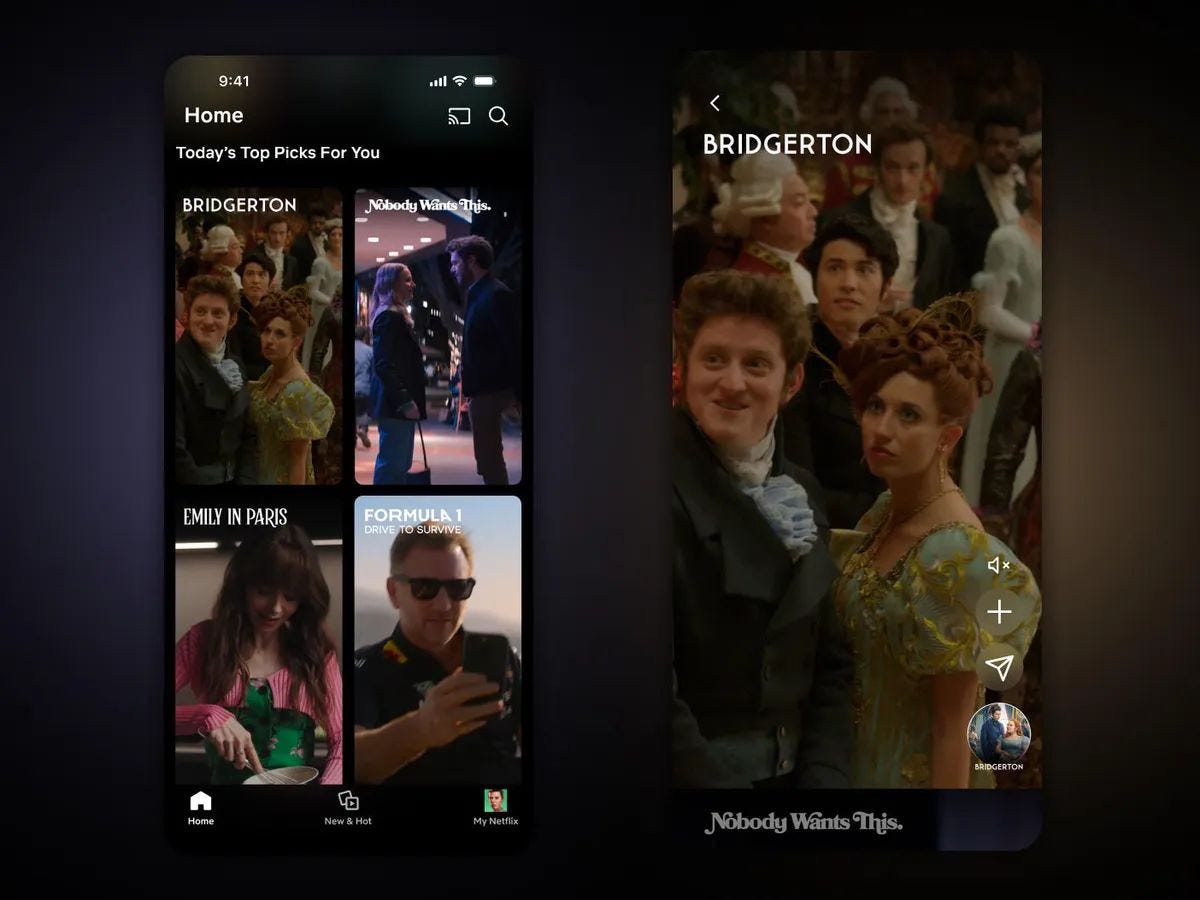
Netflix is rolling out a redesigned mobile app centred around a new vertical video feed, similar to platforms like TikTok. The feature shows short clips from shows and movies that users can scroll through, making it easier to discover something to watch. With one tap, viewers can jump straight into the full title, turning quick browsing into immediate viewing. The update reflects a bigger shift in viewing behaviour toward mobile and short-form content, especially among younger audiences. Instead of relying only on traditional menus and thumbnails, Netflix is introducing a more dynamic, algorithm-driven discovery experience designed to reduce decision fatigue and keep users engaged longer.
More broadly, this move highlights how streaming platforms are evolving beyond static content libraries into more interactive, feed-based ecosystems. By adopting mechanics from social media, Netflix is blurring the line between streaming and scrolling - and competing not just with other platforms, but with the wider attention economy. (The Verge)
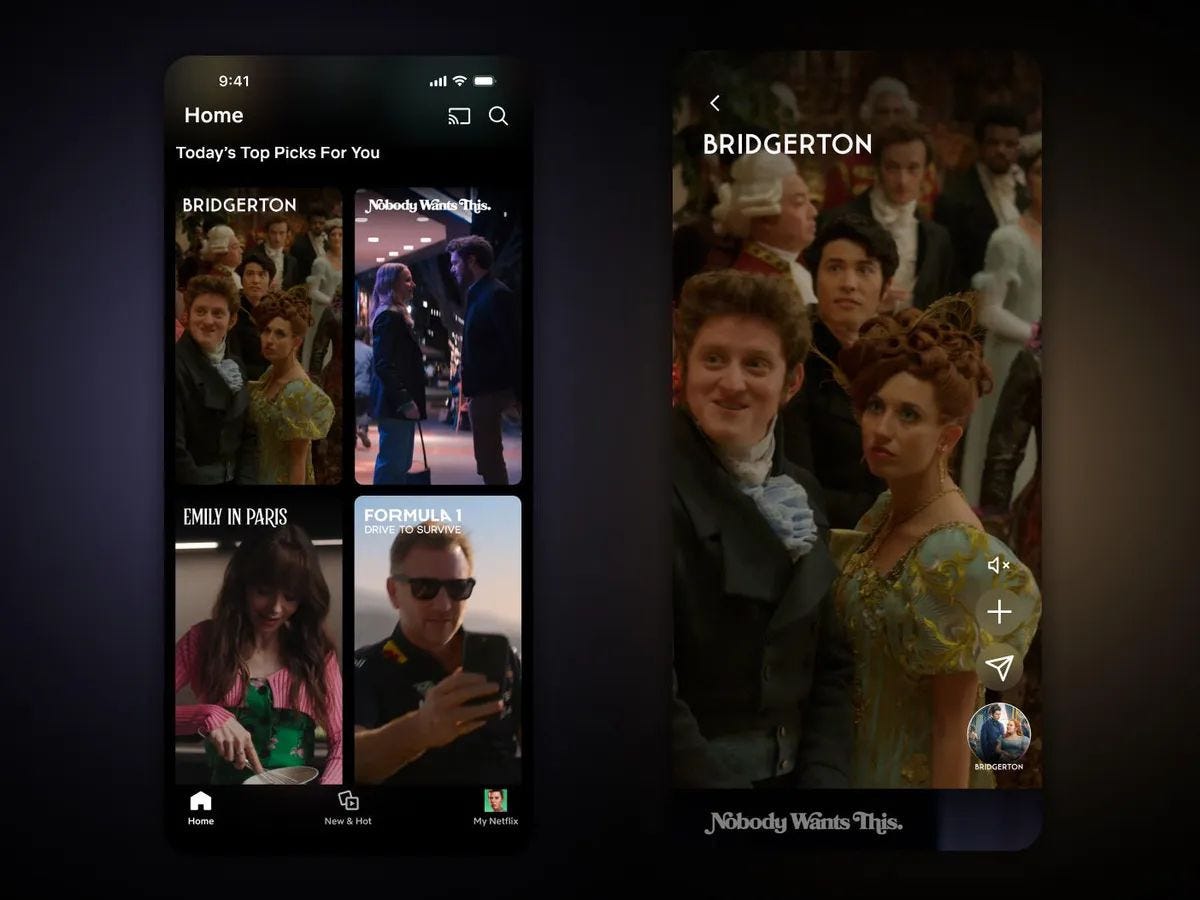
💡Netflix is signalling that streaming platforms are no longer competing on catalogue size, but on how effectively they can engineer habitual viewing from the first second of discovery.
Sister Group Buys Majority Stake in UK Digital Studio After Party.
Elisabeth Murdoch and Jane Featherstone’s Sister Group has acquired a majority stake in British digital production outfit After Party Studios. London-based After Party, which was established a decade ago by YouTuber Callum McGinley (aka Callux), director Ben Doyle, CEO Joshua Barnett and Base79 founder Richard Mansell, is behind projects such as sports-focused docuseries Scenes (Sky Sports) and Channel 4.0 series Don’t Get Catfished and Hear Me Out. It is also producing documentary Race to the Top, which follows YouTuber KSI as he completes the takeover of English non-league football team Dagenham & Redbridge. In addition to original content, After Party also produces branded and social media content including digital content for Netflix’s House of Guinness, Stranger Things and Being Gordon Ramsay, as well as the digital pre-show Five to Live that supports Sky’s SNL adaptation. Financial terms of the acquisition were not disclosed. (C21 Media)
💡Traditional production groups are no longer treating digital-first studios as external collaborators, but as core infrastructure for building modern IP ecosystems that move seamlessly between social, branded, and broadcast environments.
Spirit Studios Rolls Out AI-Powered Short-Form Channel 10 Minute History.
Channel 4-backed UK indie Spirit Studios has launched AI-powered digital channel 10 Minute History, as the company further embraces short-form content aligned with modern consumption trends. The new network delivers story-driven history in tightly structured 10-minute episodes in a format designed to appeal to YouTube and social media savvy audiences. Each episode is broken into minute-by-minute chapters, complete with cliffhangers, allowing them to be distributed as 10 standalone one-minute clips. If successful, the format may be expanded in the future to verticals such as 10 Minute Politics, 10 Minute News and more. (C21 Media)
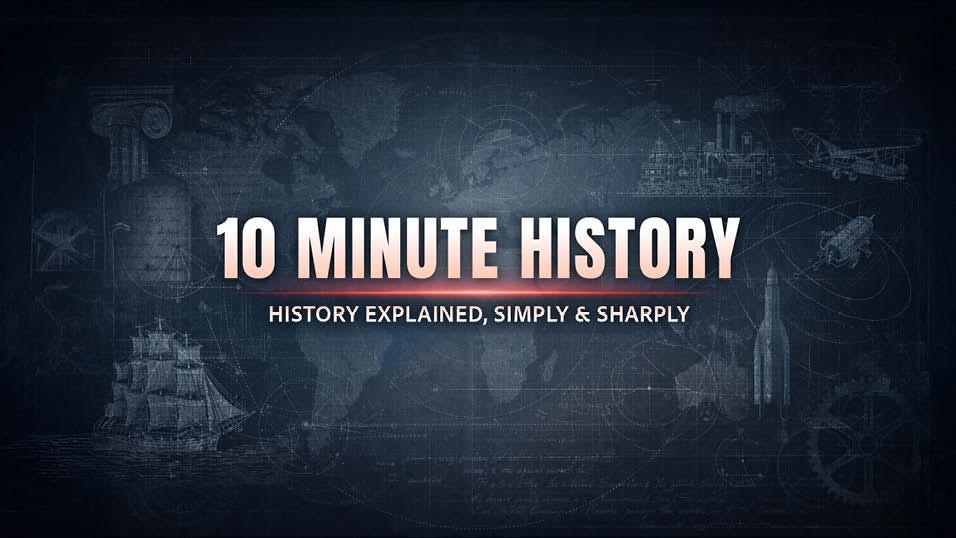
💡Spirit Studios is shifting the industry mindset from producing standalone programmes to designing “content systems,” where a single idea is engineered from the start to be atomised, redistributed, and monetised across multiple micro-formats rather than consumed as a whole.
Millennials’ Favourite Series Have Made a Major Comeback.
Reboots are all the rave right now. The nostalgic rerelease of Malcolm in the Middle drew 8.1M global views in the first three days after its April 10 premiere, becoming Disney+ and Hulu’s most-viewed season premiere of the year so far. Scrubs’ premiere episode was also ABC’s top-performing comedy episode in more than a year, while just a trailer for the upcoming Harry Potter show reboot hit a record 277M views in the first 48 hours of its release. In addition to having a comforting, nostalgic feel that draws in loyal fandoms, this recent uptick in reboot popularity could stem from Millennial parents introducing their favourite series to their Gen Alpha kids. (Bloomberg)
💡Reboots are proving that in today’s attention economy, the most powerful IP isn’t necessarily new - it’s pre-loaded with emotional familiarity and transferrable across generations, turning nostalgia into a scalable way to re-activate existing audiences while onboarding new ones.
YouTube Positions Itself as the New TV With Creator-Led Stations.
YouTube is increasingly positioning itself as a “new TV” by introducing creator-led “Stations” - always-on, linear-style streams built around popular creators. These stations combine the pull of influencer content with the familiarity of traditional TV programming, offering continuous, curated viewing experiences rather than on-demand browsing. For advertisers, this creates a new kind of premium inventory on connected TVs, blending digital targeting with a more traditional, lean-back viewing format. The strategy reflects a broader shift in how content is produced and consumed. Creators are no longer just social media personalities but are evolving into full-scale entertainment brands capable of sustaining ongoing programming. By organising their content into structured “channels,” YouTube is making creator content feel more like traditional television - something audiences can watch passively on bigger screens, not just actively on mobile. At a bigger-picture level, this move strengthens YouTube’s role in the connected TV ecosystem and its competition with traditional broadcasters and streaming platforms. By merging creator-driven entertainment with TV-like formats, YouTube is positioning itself as a central hub for both audiences and advertisers - blurring the line between social video and television, and accelerating the shift toward a creator-led media landscape. (EMARKETER)
💡YouTube is effectively redefining television as a creator-led distribution system, where the value shifts from individual videos to always-on programming environments designed to replicate the lean-back habits of traditional TV while still being powered by social-native content and creator audiences.
🧠 Strategy Spotlight: From Libraries to Loops
For years, the streaming wars were fought on the same battlefield: who has the best library. More titles, bigger IP, deeper catalogues. But that logic is quietly breaking down. Because abundance created a new problem - decision fatigue. And decision fatigue is the enemy of attention.
What we’re seeing now is a strategic pivot away from ownership of content towards control of consumption.
Platforms like Netflix are no longer just curating libraries; they’re engineering entry points. A vertical feed isn’t just a feature, it’s a behavioural shortcut. It removes the question “What should I watch?” and replaces it with “Keep going.”
The moment you eliminate choice friction, you increase time spent. And in today’s attention economy, time is the real currency.
The Rise of Loops
This is where the idea of loops becomes critical.
A loop is not just a format - it’s a system. It’s a closed circuit where content continuously feeds back into itself: discovery → engagement → continuation → rediscovery. The most successful media products today are designed not as one-off experiences, but as self-perpetuating cycles.
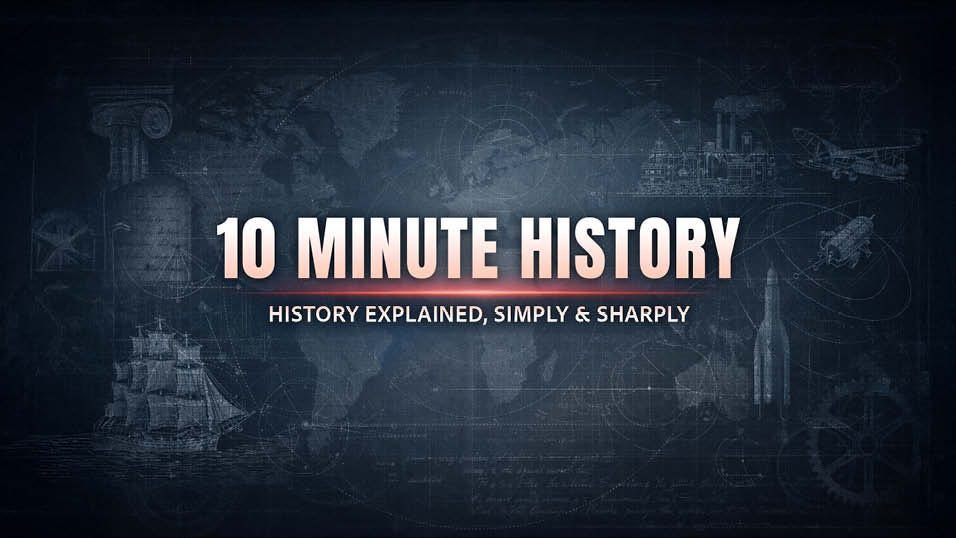
Look at how Spirit Studios is structuring 10 Minute History. Each episode is not only a complete story, but also a modular asset - broken into one-minute segments, each with its own hook and payoff. This isn’t storytelling in a traditional sense; it’s narrative architecture optimised for redistribution. Every piece is designed to lead somewhere else, or back to itself.
From Choice to Flow
At the same time, YouTube is leaning into “Stations” - always-on streams built around creators. This flips the model entirely. Instead of asking users to choose content, it offers them a continuous flow. It’s not about what to watch, but about staying in the stream.
In many ways, this brings media back to its linear roots, but rebuilt with algorithmic precision and creator-driven identity.
Why Nostalgia Works Again
Even the rise of reboots fits this logic. Familiar IP isn’t just safe, it’s loopable. Audiences don’t need onboarding. They drop in, re-engage, and often cycle through the same worlds again, sometimes across generations.
Nostalgia becomes a retention strategy.
The Strategic Shift
So what’s really changing?
We are moving from content as a destination to content as a looped journey.
In this new model:
Discovery is embedded in the experience, not separate from it
Formats are designed for fragmentation and reassembly
IP is valued for its ability to sustain repeated engagement
Platforms compete on flow, not just catalogue
What this Means for Creators & Brands
For creators, studios, and brands, this changes the brief entirely. It’s no longer enough to ask, “Is this good?” The better question is: Does this create momentum?
Can it be clipped, continued, re-entered?
Does it invite the next interaction without requiring a new decision?
Can it live in multiple formats without losing its core?
We need to build systems of attention - where every piece of content is a doorway, and every doorway leads back inside.
🚀 StreamTV Europe: 10 Things That Aren’t “Future” Anymore
Earlier this week, I was half-jokingly wondering if I should rename this Substack TV Presentist instead of TV Futurist. That thought came right after attending StreamTV Europe last week - where it struck me that the industry has finally arrived at a point that feels very familiar to me. Not because nothing new is happening, but because the core ideas I’ve been working around for years are now widely shared.
Then I went to Content Europe - and it felt like a time shift in the opposite direction. Many of the conversations were still rooted in a more traditional, linear TV mindset: schedules, windows, distribution. Which made the contrast even clearer.
At StreamTV, the focus was on attention, community, and return behaviour. As Evan Shapiro put it, this isn’t a shift anymore - it’s the baseline. The industry is no longer trying to aggregate the biggest audience, but to earn attention repeatedly. Loyalty over reach. Community over scale.
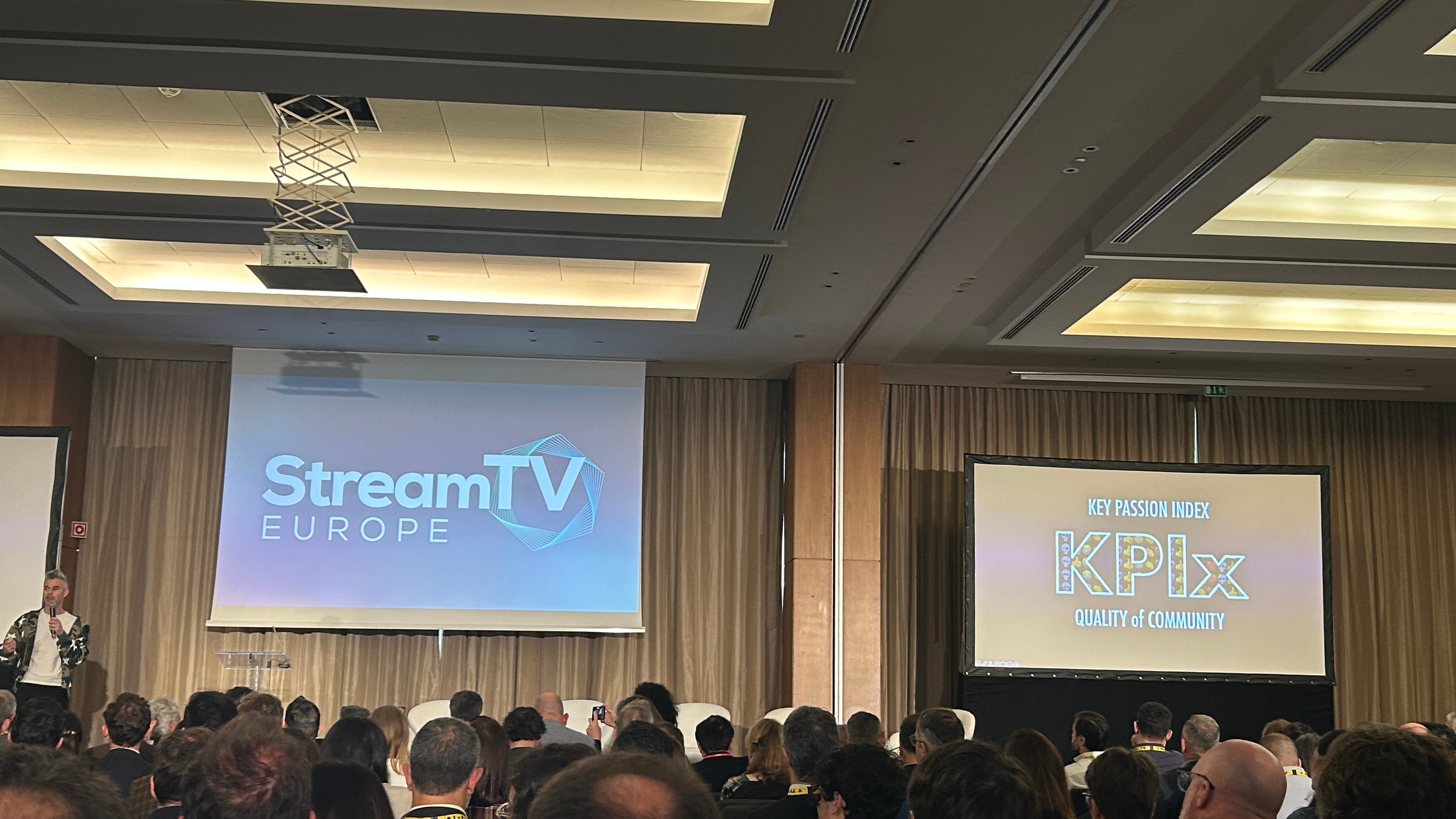
What’s emerging is a more integrated system where content, marketing, distribution, and community are no longer separate. IP is shaped by audiences in real time, and platforms like YouTube reflect a model built on continuous engagement rather than one-off viewing. None of this felt radically new - but seeing it consistently reflected across the industry is exactly the point.
If you want the full breakdown of what stood out - and why it matters now - read my full recap HERE.
☀️ Weekend Vibes
If something sparked a thought, or you think a friend would enjoy this, hit reply or forward it along. Sandra x
Please feel free to reach out to me if you would like to discuss this further or if you have any questions: sandra@tvfuturist.com or connect with me on LinkedIn.