

Weekend Waves 20/26
🧭 Media Is Shifting From Audience Building to Audience Access

Happy Friday, Wavemakers!
It looks like media is becoming more fragmented than ever. In reality, it’s fragmenting on the surface - but converging underneath.
Here are the top stories making waves this week:
1️⃣ Media is Shifting From Audience Building to Audience Access
2️⃣ Social Platforms are Splitting into Paid vs Data Economies
3️⃣ Legacy Digital Media is Reinventing itself as Video-First IP
Let’s dive in!
🌊 News that Made Waves
Prime Video Follows Netflix and Disney by Adding a TikTok-like ‘Clips’ Feed in its App.
Amazon is adding a short-form video feed to the Prime Video app called “Clips,” the company announced. Rolling out first in the U.S., Clips will include… well, clips of shows on Prime Video that are designed to hook a viewer and get them to give the full show a try. From that clip, users can add a title to their watchlist, share it with a friend, or navigate to rent, buy, or access the title through their subscription. “Clips gives customers a whole new way to browse with short, personalised snippets tailored to their interests,” said Prime Video’s director of Global Application Experiences, Brian Griffin, in a press release. “Whether they have a few minutes to scroll or are looking for something to watch when they have more time, entertainment is just a tap away.” Amazon first tested this short-form feed during the NBA season, showing highlights that users can scroll through as though they’re watching TikToks. (TechCrunch)
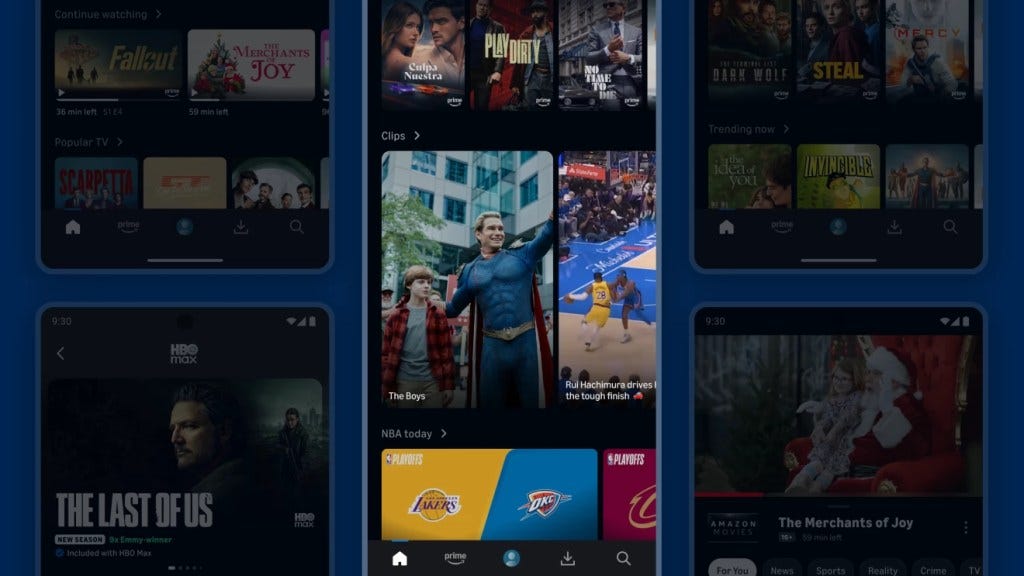
💡Streaming platforms are no longer competing just on what you watch - but on how they keep you scrolling between watches. The TikTokification of TV is officially becoming the default discovery layer for entertainment.
TikTok is Launching an Ad-Free Version in the UK.
TikTok users in the UK are getting a way to get rid of ads, but it will cost them. On Monday, the social media platform introduced TikTok Ad-Free, a subscription-based version of the service that completely banishes ads. It’s a very simple affair: Pay £3.99 per month, and you will see no ads. If you don’t want to pay, you can continue to use TikTok with ads. The Ad-Free tier does not come with any additional benefits. From the company’s FAQ on the matter: “Whether someone chooses the ad-free subscription or continues with the free ad-supported version, their core TikTok experience remains the same. All users will continue to have access to the same features, creators, and content.” There’s another benefit to subscribing to TikTok Ad-Free; if you do so, your data will not be used for advertising purposes. Regular users will see ads personalised to their interests, but that means TikTok will collect some of their data to be able to serve those ads.
According to TikTok, the Ad-Free option is rolling out “over the coming months” to UK users aged 18 or over. (Mashable)
💡Social platforms are starting to split users into two economies: people who pay with money, and people who pay with data. TikTok’s ad-free tier turns privacy into a premium product.
Byron Allen Buys Controlling Stake in BuzzFeed.
Media mogul Byron Allen, owner of Allen Media Group and Weather Channel, has acquired a controlling stake in Buzzfeed for $120m, with Allen taking over as CEO from current boss and co-founder Jonah Peretti who will instead move to a president role. Buzzfeed, once the darling of early Millennial Internet culture, now a castaway of clickbait cringe, was valued at $1.7bn by NBCUniversal back in its heyday of 2016, but has fallen on tougher times since, with the company posting a $15m net loss in its first quarter 2026. Allen has flagged plans to expand the company into free streaming video to take on rivals such as YouTube in the user-generated content space. HuffPost, which is owned by Buzzfeed, will also be included in the transaction. (tvinsider)
💡BuzzFeed’s next chapter says a lot about media in 2026: surviving digital publishers are no longer trying to win the article wars - they’re trying to become video platforms.
YouTube, BBC Kick Off Creator Economy Training Programme in the U.K.
Creators in the U.K. have asked for more professional services that can help them level up their careers. And YouTube has answered the call. The video platform has teamed up with the BBC and the National Film and Television School (NFTS) to launch a multi-city training programme catered to creators and other digital media professionals. Through a nationwide slate of workshops and events, YouTube and the Beeb are aiming to incubate a new generation of polished personalities. The programme, which kicked off in Birmingham on May 14, will begin with a cohort of 150 pupils. Not everyone taking part in the training is a digital-native creator; TV producers and journalists are also taking part. (TubeFilter)
💡The creator economy is becoming institutionalised. When YouTube, the BBC and film schools start training creators together, the line between “Internet Creator” and “Media Professional” officially disappears.
The Return to Long-Form: Why YouTube Is Winning Back Brands.
While we know young people can’t get enough of short-form content, brands like Coach, Chanel, and Nike are also betting on long-form campaigns like behind-the-scenes or documentary-style videos on YouTube. The strategy is smart, considering 88% of Gen Z and Millennials use YouTube to discover new products, and 78% of Gen Alpha uses YouTube on a regular basis according to Vogue Business/Archrival. Brands are also noticing that building viewership and duration creates a sense of loyalty from their young audience. Coach has seen success with its investment into YouTube partnerships already. The brand took over YouTuber Haley Pham’s account last year for a campaign called “Dear Haley,” which drove a 60% increase in “global top-of-mind awareness among Gen Z.” The brand’s “Explore Your Story” campaign, which embraced long-form content with spots from celebs like Elle Fanning and Storm Reid, also saw 15M organic engagements across the board. (Vogue Business)

💡Brands are realising that YouTube isn’t competing with TikTok on speed - it’s winning on depth, where longer formats quietly do the work of building real audience loyalty.

🧠 Strategy Spotlight: Media Is Shifting From Audience Building to Audience Access
For most of modern media history, success was defined by one central challenge: building an audience from scratch. Whether you were a broadcaster, publisher, or creator, the goal was simple in theory but difficult in practice - attract attention, retain it, and grow it over time.
That model is changing. But not in the way it’s often described.
We are not entering an era where audiences are simply “built-in.” We are entering an era where access to audiences is built-in - but ownership is not.
Platforms Have Become Pre-Built Attention Systems
The most important shift is structural. Platforms like TikTok, YouTube, Instagram, and increasingly streaming services, no longer just distribute content. They actively structure how attention flows.
Users don’t arrive as blank slates. They arrive inside fully formed behavioural systems - feeds, recommendations, autoplay loops, and personalised discovery layers.
In that sense, audiences are “pre-assembled” in terms of available attention. But they are not assigned to anyone.
What these systems provide is not a guaranteed audience, but a constant supply of attention opportunities.
Discovery Is Now System-Led, Not Brand-Led
In the past, brands and publishers created destinations - TV channels, websites, magazines, shows - and then worked to pull audiences toward them.
Now, discovery is increasingly system-led. Algorithms decide what appears, when it appears, and in what format. The “front door” is no longer a brand homepage, it is a recommendation surface.
This is why short-form clips, previews, and algorithm-friendly formats have become so dominant. They are not just content types. They are entry mechanisms into attention systems.
Whether it’s a TikTok clip, a YouTube Short, or a streaming preview, the function is the same: reduce friction between interest and engagement.
The Real Shift: Reach vs Fandom
This is where the distinction becomes critical.
As Tom Payne, MD of Spud Gun Studios put it in Cologne: “Reach is rented. Fandom is owned.”
That framing captures the core tension of the current media landscape. Platforms can give you reach instantly - but only within their systems, and only as long as distribution flows in your favour. It is temporary, conditional, and externally controlled.
Fandom, however, behaves differently. It is slower to build, but more durable. It exists beyond a single platform’s algorithm, and it compounds over time through identity, habit, and emotional connection.
So while access to attention may be increasingly built-in, true ownership still sits with fandom, not reach.
Strategy Is Becoming About Access Points, Not Audience Size
If audiences are no longer fixed assets, then traditional growth metrics become less meaningful on their own.
What matters more is positioning inside attention systems:
Where does discovery happen?
How often does your content appear in recommendation loops?
How easily can interest convert into deeper engagement?
In this environment, strategy becomes less about scale and more about placement. Being visible at the right moment inside a system matters more than building a static audience outside of it.
This is why media companies are converging on similar tactics: short-form clips, personalised feeds, “trailerised” content, and algorithm-first distribution thinking.
They are not chasing audiences. They are navigating access.
What This Actually Means
We are not moving beyond audience building - we are changing where it happens.
Discovery is increasingly shaped by platforms, but meaning is still created by the relationships that form after attention is earned.
⏪ ICYMI: From Ads to Entertainment Worlds
If there was one thread connecting all 10 insights from the Branded Entertainment Summit in Cologne, it’s this: we’re no longer just talking about advertising tactics.
A new media system is taking shape, where brands, creators, and studios are all working within the same entertainment logic.
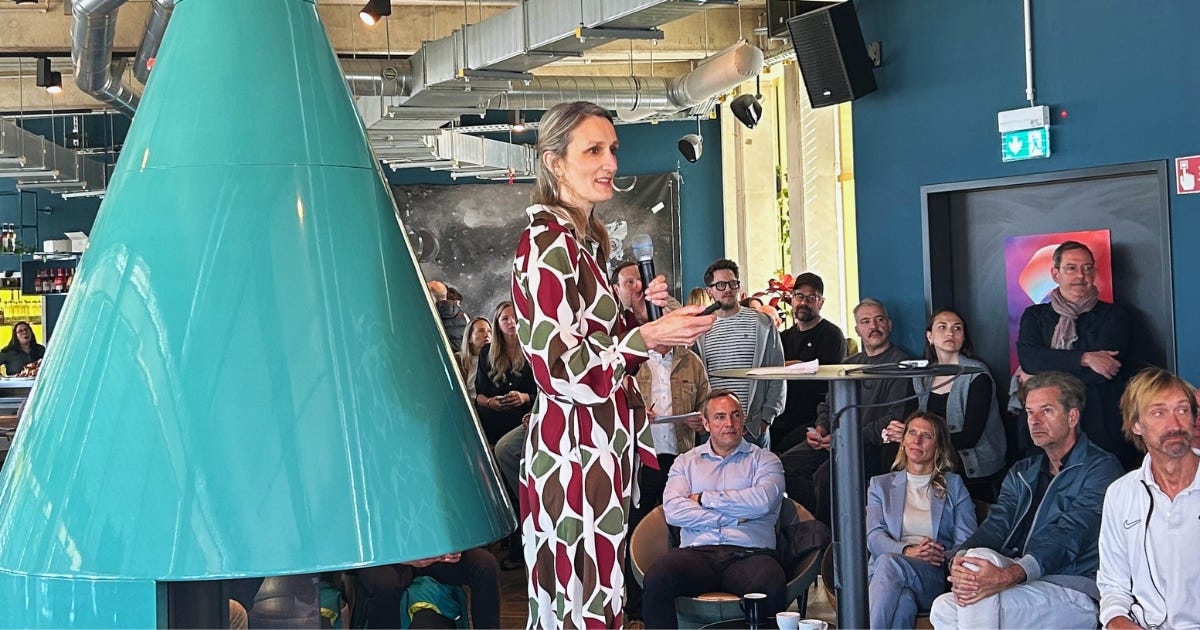
What stood out most wasn’t a single big prediction, but the consistency of direction. Whether it was i&u’s long-term IP thinking, creators building worlds instead of audiences, or the shift from campaigns to recurring formats, everything pointed toward the same conclusion: attention alone is no longer enough.
Meaning, belonging and repeat engagement are becoming the real currencies.
I broke down all 10 insights - including Tom’s “Reach is rented. Fandom is owned.”
If you missed it, it’s worth reading HERE as the foundation for everything that’s coming next in Branded Entertainment.
☀️ Weekend Vibes
If something sparked a thought, or you think a friend would enjoy this, hit reply or forward it along. Sandra x
Please feel free to reach out to me if you would like to discuss this further or if you have any questions: sandra@tvfuturist.com or connect with me on LinkedIn.