

Weekend Waves 29/26
⚔️ The Format Wars Are Back

Happy Friday, Wavemakers!
This week, one theme stood out: formats. From Netflix revisiting live channels to the launch of a dedicated micro drama app and Gen Z discovering athletes through TikTok edits, companies are experimenting with new ways to package stories for different audiences and viewing behaviours.
Here are the top 3 stories making waves this week:
1️⃣ Netflix Explores Live TV and Bundles
2️⃣ RoseBerry Launches Micro Drama App Epis
3️⃣ Gen Z Discovers Sports Through Fan-Created Content
Let’s dive in!
🌊 News that Made Waves
Netflix Is Exploring Live TV and Bundles as It Struggles to Keep Viewers Hooked.
Netflix is exploring new ways to increase viewer engagement as the streaming market becomes more competitive. According to The Wall Street Journal, the company is considering adding live TV channels, expanding bundles with other streaming services, and increasing its investment in live programming. The move comes as Netflix focuses more closely on engagement metrics, including how long subscribers watch and whether they complete films and series.
Possible new features could include always-on channels that stream content continuously by genre or theme, similar to traditional linear TV and free ad-supported streaming services. Netflix is also reportedly looking at partnerships that would allow subscribers to access other streaming platforms through its service, following strategies already used by competitors. The company has already introduced an ad-supported subscription tier and expanded into areas such as live events and shorter-form content. With competition from platforms including YouTube, Disney+, and ad-supported streaming services, Netflix is exploring different models to keep audiences within its ecosystem. (WSJ)
💡 The streaming giant that once disrupted television is now borrowing some of its oldest ideas - channels, bundles, and programming - to solve a very modern problem: keeping attention.
RoseBerry Micro Drama App Epis Goes Live With More Than 100 titles.
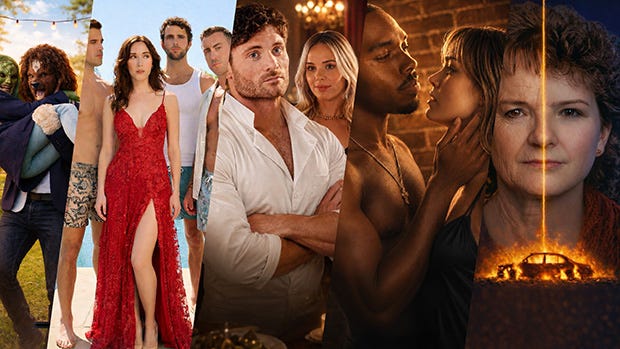
Vertical video company RoseBerry Media has gone live with its first micro drama app, Epis, featuring more than 100 titles spanning originals and reformatted versions of existing shows. Epis’s slate of originals includes a pair of drama series, Revenge is a Dish and Make Me a Match, from Banijay-backed British prodco Lime Pictures (Hollyoaks); a trio of true-crime series, Two Marys, The Swindler and the Billionaire Murder, from Fremantle-backed Israeli prodco Silvio Productions; and a dating reality series, Don’t Fall for Beautiful Liars, from creator and showrunner Zipi Rozenblum. RoseBerry said it plans to release around 25 original vertical productions this year. Unveiled in early May, the company is led by creator, producer and Abot Hameiri co-founder Guy Hameiri, former Amagi exec Lior Friedman and entrepreneurs Itay Koppel and Simi Efrati. It is headquartered in New York, with creative and technology hubs in London and Tel Aviv. At the time of its launch, the company said it had deals in place with A+E Global Media, All3Media International, Banijay Rights, Cineflix Rights and Fremantle to repurpose some shows from their libraries into a vertical format. (C21 Media)
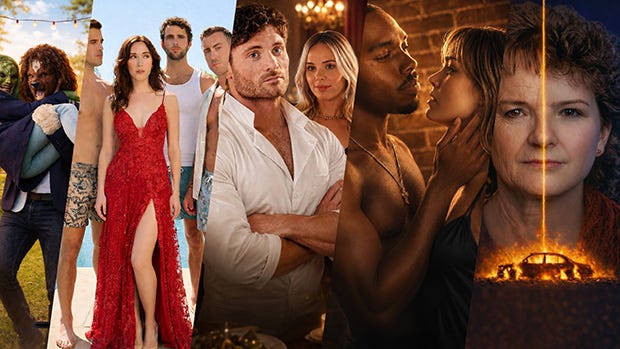
💡 With Epis, the industry is testing whether the storytelling rules of vertical video can support premium drama, reality, and existing TV franchises. We’ll see if it works out. Having talked to a lot of Asian micro drama experts over the past month, I’m sceptical.
Gen Z Is Discovering New Sports And Athletes Through Fan-Created Content.
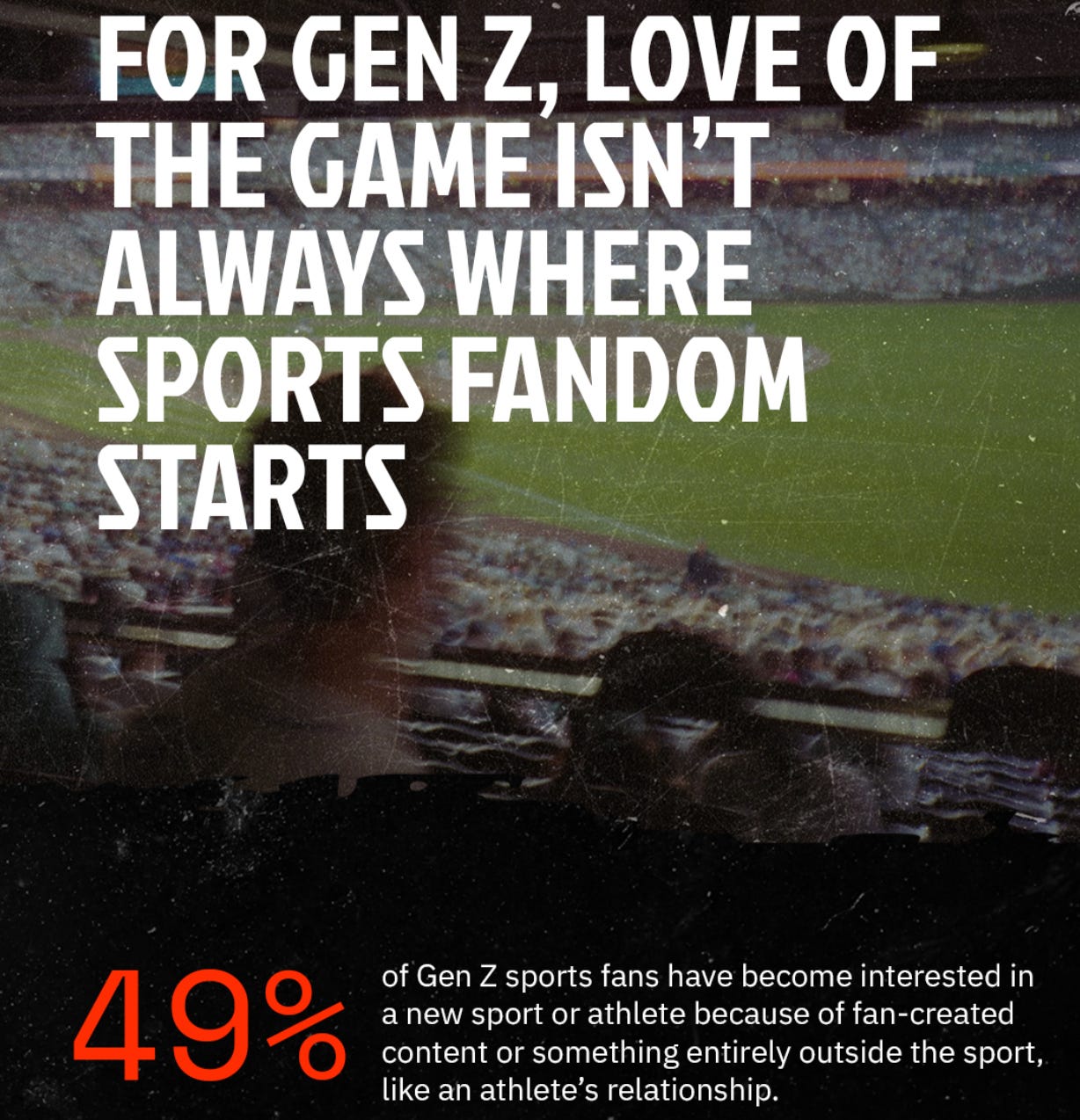
According to a new study from ACC, nearly half (49%) of Gen Z sports fans say they become interested in a new sport or athlete because of fan-created content or something outside of the sport, like a Netflix documentary, an athlete’s relationship, or a TikTok edit. Meanwhile, 32% support individual athletes over entire teams, while 25% would rather follow an athlete’s personal life and story than watch them compete. The World Cup most recently brought this phenomenon to light, but fandom-driven engagement in sports extends to other events, like the upcoming LA28: nearly two-thirds (65%) of Gen Z said they would watch a Drive to Survive-style documentary following athletes through the Olympic Games. (ACC)
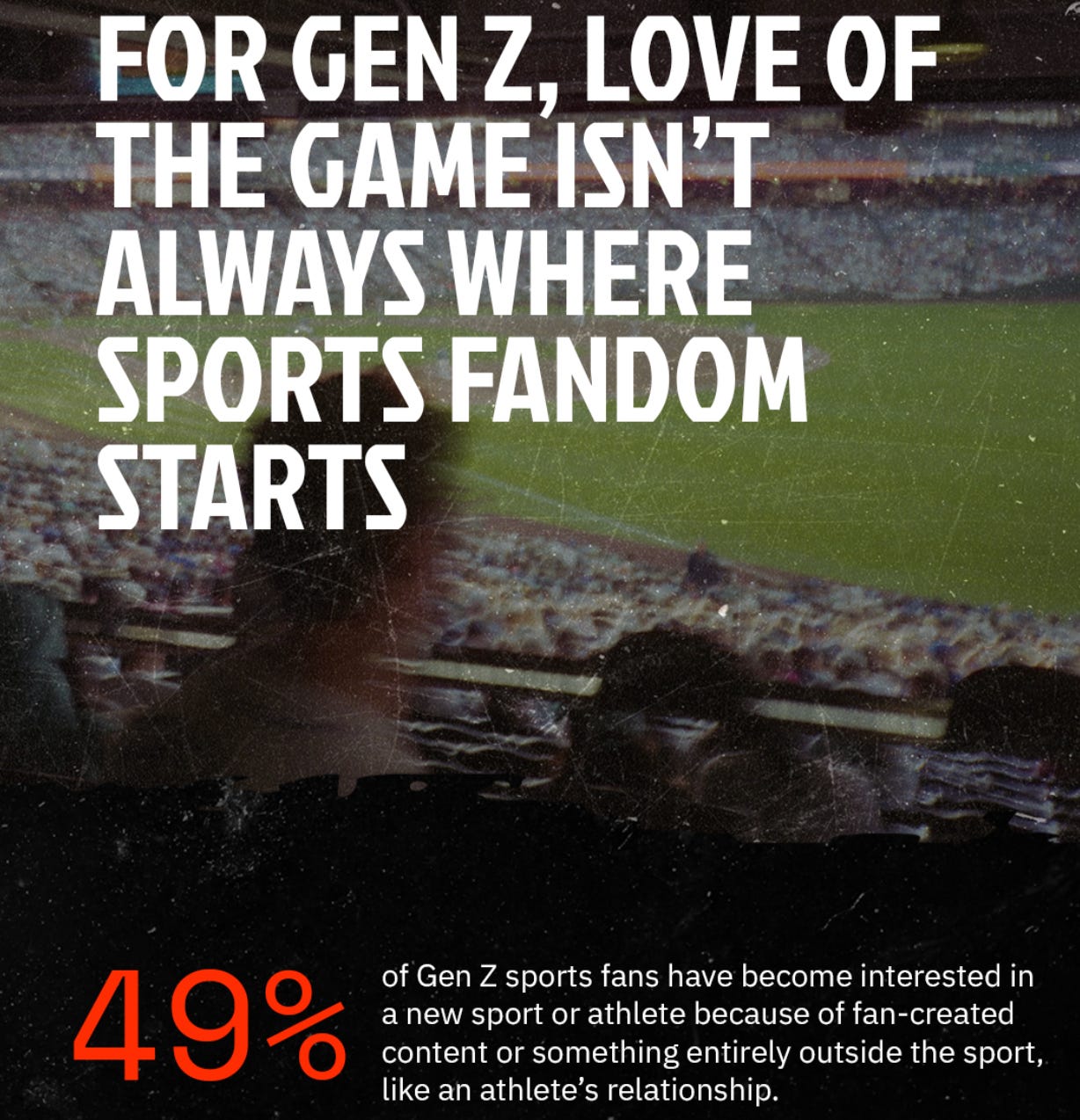
💡Fan-created content is becoming a discovery engine for sports, turning athletes into entertainment brands that exist far beyond the moments when they compete. I would say the Social Media star of the current world cup is Erling Haaland (a.k.a. Lyng). Who else has Kygo’s remix on repeat?
Read 48 Pitch Decks That Creator-Economy Startups Used To Raise Millions Of Dollars.
Business Insider compiled pitch decks from 48 creator economy startups that raised funding across different investment stages. The article listed companies ranging from Series A rounds to pre-seed funding, with investment amounts spanning from $200,000 to $50 million. Restream raised $50 million in Series A, the largest round featured, while Hedra, a generative AI video platform, secured $32 million from A16z in 2025. ShopMy, an affiliate marketing platform for creators, raised $26.5 million in Series A and later secured $147 million at a $1.5 billion valuation in 2025. Several AI-focused startups appeared in the compilation, including Linguana at $8.5 million seed funding and AvatarOS at $7 million. The pitch decks ranged from six pages to 46 pages in length. Lumanu CEO Tony Tran told Business Insider his pitch deck served as a “conversation guider” focused on “why, what, how, and why now.” (Business Insider)
💡The funding flowing into creator-economy startups shows that investors are not only betting on creators - they are betting on the businesses being built around them.
Culinary Creators And Food Network Stars Will Chop It Up On TikTok LIVE.
TikTok LIVE and Food Network launched a livestreamed cooking series pairing TikTok creators with Food Network chefs. The series debuted July 8 across the @foodnetwork, @tiktok, and @tiktoklive_us accounts. The inaugural episode, “TikTok LIVE x Food Network Presents: Tomato Season,” paired Food Network chef Antonia Lofaso with TikTok creator Jose El Cook. Lofaso owns several Los Angeles restaurants including Black Market Liquor Bar and Scopa Italian Roots. Jose EL Cook built his following on cooking videos and shares recipes through his Substack. The hour-long live-stream featured tomato-based dishes with viewers voting in polls, submitting questions, and sending gifts. The format followed a “Future of Flavor LIVE” event the companies held earlier in 2026. The companies planned additional episodes pairing creators with other Food Network chefs. (Tubefilter)
💡The Food Network and TikTok LIVE collaboration shows how traditional media brands are experimenting with hybrid formats that combine professional expertise, creator influence, and real-time audience participation - something social TV pioneers like Swiss channel joiz were already exploring more than a decade ago.
🧠 Strategy Spotlight: The Format Wars Are Back
For years, the industry conversation focused on platforms: streaming vs. traditional TV, Netflix vs. broadcasters, subscription vs. advertising.
But another shift is happening underneath: the formats themselves are changing.
Audiences are moving between very different ways of consuming stories - from live channels to vertical dramas, from creator live-streams to sports storytelling. And companies are experimenting with formats that fit specific behaviours, platforms, and communities.
The result: the format has become a strategic decision again.
Netflix Looks Back at Linear
Netflix is exploring live TV channels and bundles as it looks for new ways to increase engagement.
The move brings back elements of traditional television: curated programming, always-on channels, and the ability to lean back and watch without making a choice.
But this is not a return to old-school TV. Instead, streaming platforms are rethinking how much control audiences actually want.
Sometimes the challenge is not having more content - it is helping people decide what to watch.
Micro Dramas Build a Different Story Structure
At the other end of the spectrum, micro dramas are creating a completely different viewing experience.
RoseBerry’s new app Epis launched with more than 100 titles, including original productions and shows adapted into vertical formats.
The format is built around mobile behaviour: short episodes, rapid storytelling, strong hooks, and constant cliffhangers.
Rather than adapting traditional television to a smaller screen, micro dramas are developing their own storytelling rules.
Note: I wrote a whole article on micro drama storytelling this week - coming to MIPBlog soon.
When TV Meets Creator Culture
Traditional entertainment brands are also experimenting with formats that combine professional production with creator participation.
TikTok LIVE and Food Network’s new cooking series brings chefs and creators together in an interactive live-stream format, where audiences can comment, vote, and engage in real time.
It is not a traditional cooking show, but it is also not simply creator content. It represents a growing space between television and social platforms.
The Format Question
The same shift can be seen in sports, where Gen Z audiences increasingly follow athletes through documentaries, TikTok edits, and personal stories beyond the competition itself.
The format surrounding the event becomes part of the experience.
For media companies, this creates a new strategic challenge:
The question is no longer only which stories to tell. It is which format allows those stories to connect with audiences.
Because the same IP can now exist as a series, a live-stream, a vertical drama, a creator collaboration, or a community-driven experience.
The format is no longer just the container. It is part of the product.
🎬 Behind Branded Entertainment: From TikTok to Tangible Worlds - How Aardman Is Expanding Entertainment Beyond the Screen
What does it take for a 50-year-old animation studio to stay relevant in the age of TikTok?
In my latest interview for MIPBlog, Aardman’s Executive Commercial & Brand Director Emma Hardie shares how the studio behind Wallace & Gromit and Shaun the Sheep is adapting to changing audience behaviours while growing revenue from brand and content exploitation by 30% over the past two years.
We discuss why Aardman created a dedicated social animation team for TikTok, how audience insights are shaping licensing, live experiences, and content strategy across different markets, and why the studio is focusing on participation rather than passive viewing.
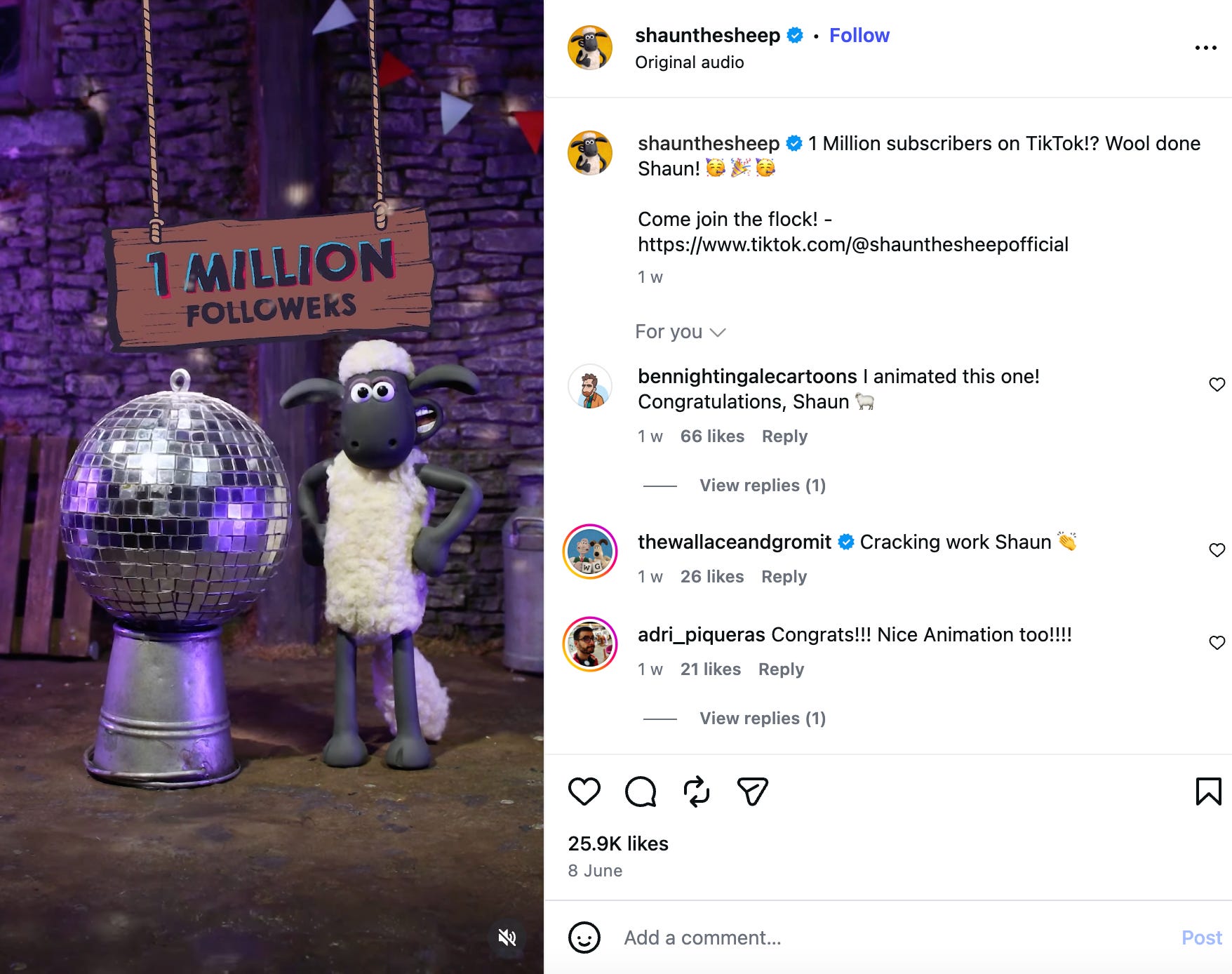
It’s an interesting look at how one of the world’s most iconic animation studios is evolving its IP beyond the screen - and what other media companies can learn from its approach.
👉 Read the full interview HERE to discover how Aardman is rethinking audience engagement, platform strategy, and the future of entertainment brands.
☀️ Weekend Vibes
If something sparked a thought, or you think a friend would enjoy this, hit reply or forward it along. Sandra x
Please feel free to reach out to me if you would like to discuss this further or if you have any questions: sandra@tvfuturist.com or connect with me on LinkedIn.