

Weekend Waves 08/26
🔌 Control the Pipes, Control the Power

Happy Friday, Wavemakers!
This week, the game has shifted. The battle for attention isn’t just about who can make the flashiest content anymore, it’s about who controls the flow. From Apple locking video podcasts into its ecosystem, to Disney turning vertical feeds into franchise extensions, to John Wick jumping from movies to an AAA video game, the lesson is clear: Distribution is the new power.
We’re not just chasing trends, we’re watching the playbook for the post-platform era unfold. Who owns the audience? Who owns the pipeline? And how are creators, brands, and studios building semi-closed systems that keep attention - and data - inside their walls?
Here are the top stories making waves this week:
1️⃣ Apple Podcasts Goes Video
2️⃣ Amelia Dimoldenberg Moves to Film
3️⃣ John Wick Game Launch
Let’s dive in!
🌊 News that Made Waves
Apple Introduces a New Video Podcast Experience on Apple Podcasts.
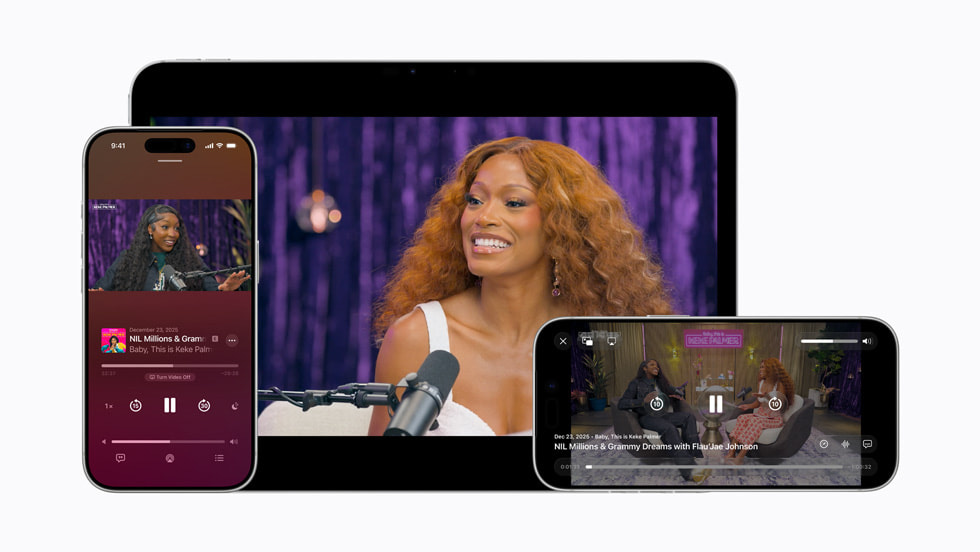
Apple announced a transformative update coming to Apple Podcasts this spring that will bring advanced video podcast capabilities to the app. In the Apple Podcasts app, users will be able to switch seamlessly between watching and listening to shows, making the experience of discovering and viewing video podcasts as simple and enjoyable as listening to audio podcasts has always been. Users can watch video from within the app and move to horizontal full display, as well as download videos to watch offline. And automatic quality adjustment powered by HLS technology ensures smooth playback across network conditions, delivering the best possible experience whether listeners are on Wi-Fi or a cellular connection. Video episodes will integrate with existing features Apple Podcasts users already love, including personalised recommendations and editorial curation on the New tab and in Category pages. (Apple)
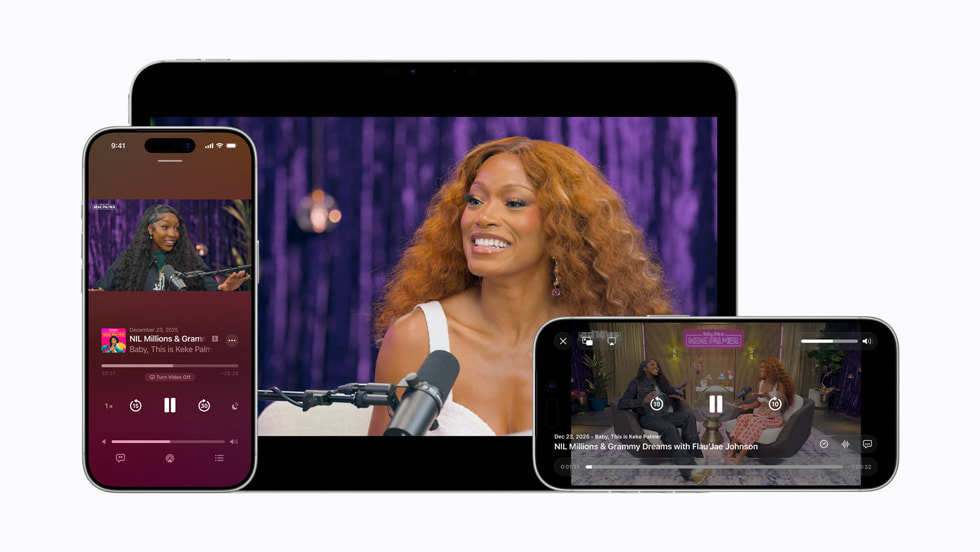
💡With video now fully integrated into Apple Podcasts, Apple isn’t just adding a feature, it’s reinforcing its ecosystem so creators and audiences can stay inside Apple’s infrastructure instead of defaulting to YouTube.
Gen Z’s Favourite YouTuber Amelia Dimoldenberg is Coming to the Big Screen.
The “Chicken Shop Date” creator is stepping into a bigger creative spotlight: starring in and producing her own film. She’s developing a rom-com for Amazon MGM Studios, playing a journalist whose carefully planned life goes off script when a routine celebrity interview sparks an unexpected romance. For those who don’t know, Dimoldenberg has built a massive following on YouTube with her endearingly awkward celebrity interview “dates,” chatting with A-listers like Jennifer Lawrence and Andrew Garfield over fried chicken in London. She also recently did an acting stint as a journalist in HBO’s Industry, so her newest role feels like a natural next step. Her fans are excited for this new journey, too; One X user joked, “From awkward nuggets to a literal rom-com lead… Amelia’s manifestation skills need to be studied. Absolutely deserved!” (Variety)
💡Amelia Dimoldenberg’s move into a rom-com with Amazon MGM Studios shows once again that creator-led formats are no longer side projects, but they’re becoming scalable IP pipelines into Hollywood.
Crocs’ New Sales Strategy? A Five-Part Micro Drama.
Crocs is the latest company to commit to Micro Drama-as-Marketing. Its five-part series Charmed to Meet You is a partnership with Creative Artists Agency (CAA) and ReelShort, the short-form streaming app founded in 2022 by Crazy Maple Studios. It was apparently inspired by the story of a real Crocs employee.
In Charmed to Meet You, that employee is embodied by Lexi, an early-20s single woman who’s facing down Valentine’s Day alone when she notices a pair of plain men’s crocs outside a neighbouring door in her apartment building. Her friends encourage her to connect with this mysterious Croc-wearer, so she starts decorating his shoes with the brand’s signature Jibbitz. We would warn for spoilers, but we think you can see where this is going. And because it’s branded, the love story is a solid throuple: Lexi, her beau, and Crocs. (Tubefilter)
💡By launching a five-part Micro Drama on ReelShort, Crocs is treating entertainment as performance marketing, embedding its product inside bingeable narrative rather than interrupting the feed with Ads.
American Eagle is Using its New Creator Programme to Target Gen Z.
The retailer recently launched the AE Creator Community, a new programme designed to build long-term relationships with a wide network of Gen Z creators. While the brand has, of course, worked with influencers before - including last year’s “Live Your Life” affiliate programme - this new initiative gamifies the process. Creators can now earn commission on sales, plus points for posting content and completing monthly challenges, which can be redeemed for gift cards and products. To join, creators must be U.S.-based, 18-years-old or older, and have at least 1K followers - signalling that AE is prioritising micro- and nano-influencers over mega creators. Smaller creators have outsized influence with Gen Z, making AE’s latest venture a strategic move for a generation that values authenticity over scale. (Adweek)
💡By launching a gamified creator community focused on micro- and nano-influencers, American Eagle is shifting from one-off influencer campaigns to building a scalable, semi-owned distribution network powered by Gen Z authenticity.
Disney is Bringing Fan Favourite Characters to a New Vertical Mini-Series.
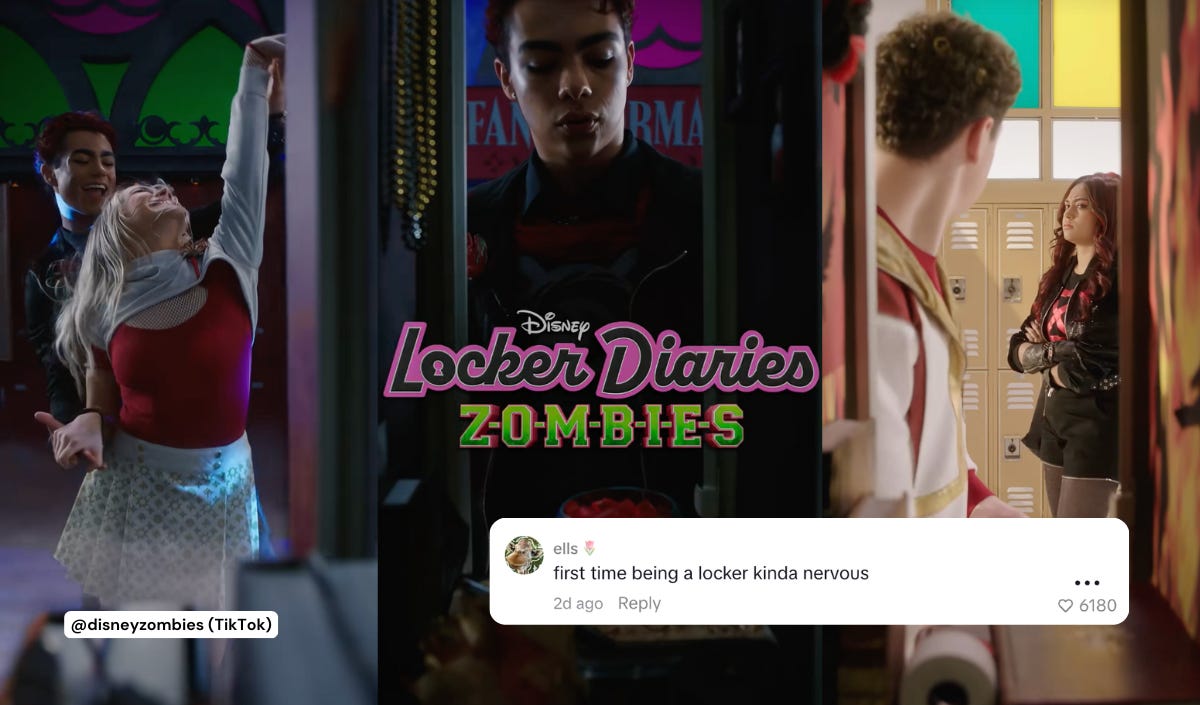
Fitting into vertical feeds, Disney’s new series Locker Diaries is framing stories through just the window of an open locker door. The short-form episodes include characters from Gen Z and Gen Alpha faves like Phineas and Ferb, ZOMBIES, and Descendants, each of which will have their own “season” in the anthology. The first two episodes of Locker Diaries: ZOMBIES which launched Saturday have already pulled in 2.9M and 1.4M views respectively on TikTok, with commenters excited to see these characters back on their screen. (And making jokes about being stuck in the locker.) But these episodes aren’t only for Instagram, YouTube, and TikTok - they’ll be streaming on Disney+, too, bringing vertical content to any screen young viewers stream on. (abc7)
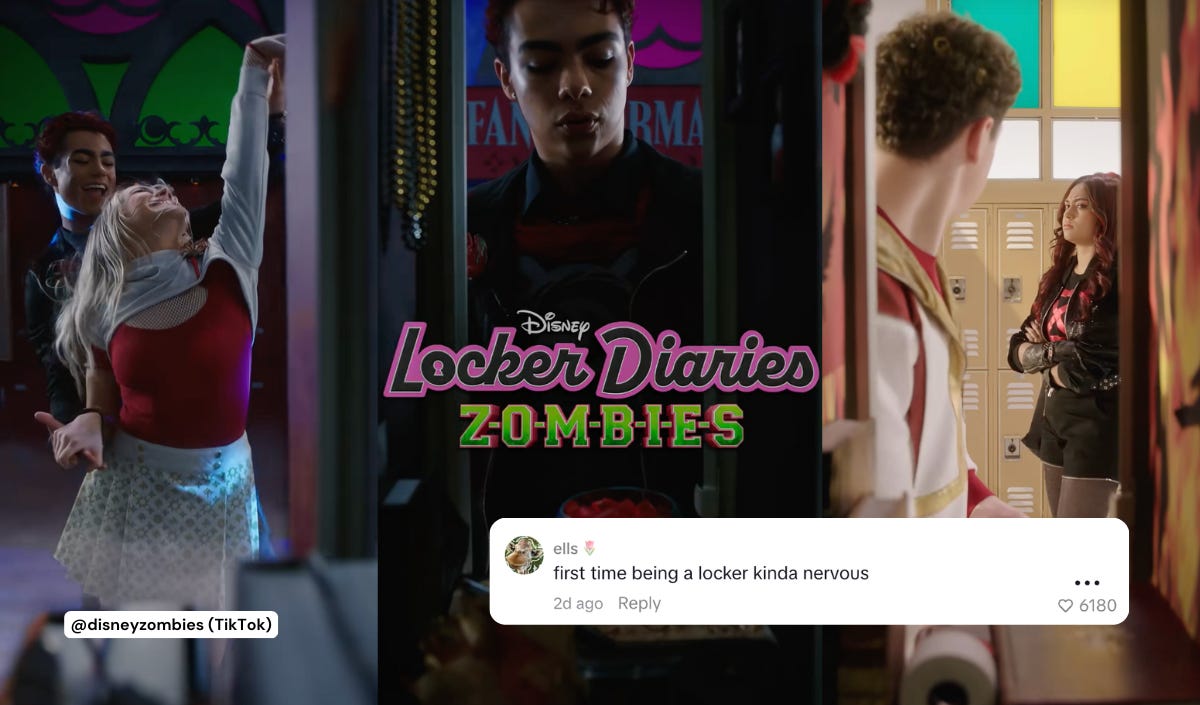
💡With Locker Diaries, Disney is turning vertical social formats into franchise extensions, ensuring beloved IP reaches Gen Z and Gen Alpha across feeds and streaming platforms. Sabrina Reed did a great breakdown of the series:
V&A Displays first YouTube Video and Watchpage.
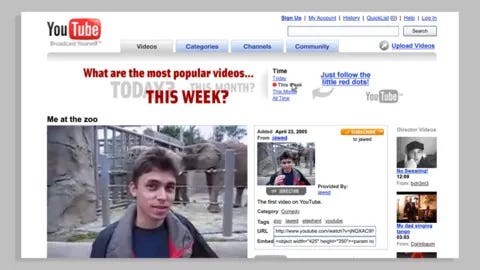
Visitors to the Victoria & Albert Museum (V&A) will be able to “step back in time” as a reconstruction of the original YouTube watchpage goes on display. The V&A has worked with YouTube to rebuild the design and experience of the platform, using internet archives from December 2006 - the oldest available. The South Kensington museum has also acquired the first video ever uploaded to the site, called Me at the Zoo, posted by YouTube’s co-founder Jawed Karim in April 2005. YouTube’s chief executive Neal Mohan said: “By reconstructing the original 2005 watchpage, we aren’t just showing a video; we are inviting the public to step back in time to the beginning of a global, cultural phenomenon.” (BBC)
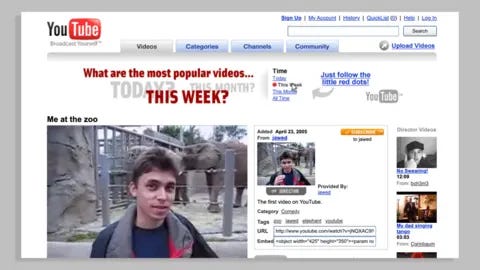
💡 By reconstructing the original YouTube watchpage and displaying the platform’s first video, the V&A is highlighting how digital culture and creator ecosystems have become historically significant, turning a moment of Internet nostalgia into a tangible museum experience.

🧠 Strategy Spotlight: Control the Pipes, Control the Power
At first, I thought Apple was just the last one to hop on the video podcast bandwagon.
Video podcasts have been booming for a while. So when Apple Podcasts announced seamless switching between audio and video, horizontal full-screen viewing, offline downloads, and adaptive streaming, my initial reaction was simple: Okay, they’re finally reacting.
But then I read a LinkedIn post by Constantin’s Kai Fischer and I realised this isn’t about video at all. It’s about infrastructure.
This is About Retention, not Trend-Chasing
Apple doesn’t need to “win” video culturally. It needs to make sure creators and audiences don’t drift away.
If video podcasts live natively inside Apple Podcasts - fully integrated into recommendations, editorial curation, and existing listening habits - then there’s no reason to leave the ecosystem to watch. The behaviour stays inside the app.
👉 Distribution retained.
👉 Attention retained.
👉 Data retained.
That’s not a feature update. That’s a structural move to reinforce the pipe. And once you see it through that lens, the rest of this week’s headlines start to connect.
Brands are Reducing Dependency
When American Eagle launches its gamified creator programme, it sounds like another Gen Z influencer initiative. But strategically, it’s something else.
Instead of renting attention campaign by campaign, AE is building a semi-owned distribution layer - a network of micro- and nano-creators incentivised to post consistently and stay engaged. It creates ongoing reach that doesn’t rely purely on paid boosts or unpredictable virality.
The algorithm still plays a role. But dependency decreases.
That’s the shift.
Embedding Inside Closed Ecosystems
The same logic applies to Crocs partnering with ReelShort for its five-part Micro Drama.
This isn’t just playful branded storytelling. It’s strategic placement inside an environment built for binge behaviour. ReelShort is already engineered for episodic retention. Crocs isn’t interrupting the feed, it’s integrating into a pipe optimised for continued viewing.
Meanwhile, Disney launching vertical mini-series across social platforms and Disney+ reflects a similar instinct. If vertical storytelling becomes the native language of younger audiences, Disney ensures that format doesn’t belong exclusively to TikTok or YouTube. The IP travels across formats, but the core relationship remains within Disney’s ecosystem.
It’s expansion without surrendering control.
The Post-Platform Reality
Even Amelia Dimoldenberg stepping from YouTube into a studio-backed rom-com fits this pattern. It’s not about abandoning a platform. It’s about diversifying distribution so your IP isn’t tied to a single algorithm.
The first era of digital rewarded those who mastered someone else’s pipes. This next era rewards those who strengthen, diversify, or partially own them.
👉 Because scale is fragile.
👉 Virality is volatile.
👉 Algorithms change overnight.
Infrastructure, however, compounds.
💭 You Asked, I Answered: Will Banning Social Media for Under-16s Kill the Next Salish Matter?
One of my readers, Stuart, asked me a very smart question last Friday after I reported the news of Netflix striking a deal with Salish Matter:
If governments restrict social media for under-16s, what happens to young talent built on those platforms?
And if teens can’t engage with each other online, who exactly is the audience?
It’s a fair concern. But here’s my take:
I don’t believe bans work. Especially not with teenagers.
1. The Psychology Problem: Forbidden = Fascinating
The more something is restricted, the more attractive it becomes.
That’s not a media theory - that’s basic human psychology.
If you tell a 15-year-old they’re not allowed on social platforms, you don’t eliminate demand. You push it underground. VPNs. Fake birthdates. Shadow accounts. Closed communities.
We’ve seen this pattern before - with music, gaming, even television formats in restrictive markets.
Teen culture doesn’t disappear. It reroutes.
2. Social Media ≠ Audience
Even if restrictions tighten, it’s naïve to assume teens suddenly won’t have digital spaces.
What’s more likely?
Age-gated ecosystems
Closed creator platforms
Parent-managed accounts
Youth-specific apps
Migration to gaming platforms (think Roblox or Fortnite-style environments)
Teens don’t need “public social media” to build audiences. They need:
Distribution
Identity expression
Peer validation
Algorithmic discovery
Those mechanics will exist somewhere.
3. The Children’s Media Summit Reality Check
Interestingly, at the recent Children’s Media Summit this week, delegates were told bluntly:
A ban on social media for under-16s will not work.
Industry voices argued that:
Enforcement is nearly impossible at scale
Digital participation is now embedded in youth culture
Education and literacy are more effective than prohibition
In other words: regulation might reshape the ecosystem, but it won’t erase it.
4. Are We Going Back to Am-Dram Talent Pipelines?
Stuart asked whether, without young influencers growing up online, we’d revert to scouting talent from amateur drama societies.
I doubt it.Because what platforms like YouTube and TikTok created wasn’t just a talent pool.
They created:
Data-backed proof of audience
Built-in fandom
Creator fluency in editing, pacing, and direct address
A generation comfortable performing to camera
Even if open social platforms become restricted, that creator literacy won’t vanish.
It will simply develop in more controlled spaces.
5. The Real Shift: Who Controls Youth IP?
The more interesting question isn’t whether teens will create. It’s who will control the pipeline.
If governments restrict access:
Platforms may build “junior ecosystems”
Studios may invest earlier in controlled creator incubators
Brands may fund talent development off-platform
Schools may become structured creative hubs
In that scenario, the next Salish Matter doesn’t disappear.
She might just be developed inside a semi-regulated sandbox before crossing into mainstream distribution on platforms like Netflix.
6. And One Final Thought:
Personally, I believe far more in media education than media restriction.
Kids should learn:
How algorithms shape what they see
How filters alter perception
How AI generates content
How Branded Entertainment works
Because the future won’t be less digital. It will be more complex.
If you also have a question, I’m always happy to hear from my readers!
👀 Format Migration Watch: From TV to Video Game
Usually, this format migration flows the other way: video games get adapted into TV shows or movies. This week, we’re seeing the reverse, as a major TV/film IP jumps into the premium gaming space.
Lionsgate’s iconic hitman franchise John Wick is being turned into a big-budget AAA game, featuring the voice and likeness of Keanu Reeves. Unveiled at PlayStation’s State of Play showcase, the untitled game will serve as a prequel to the films, giving fans an interactive entry point into the world of John Wick.
While the franchise has appeared in games before - think John Wick Hex - this is the first time a major studio is attempting a full-scale, cinematic-quality adaptation directly into gaming. It’s not just a tie-in; it’s an expansion of the IP into a fully immersive experience, designed to engage the fanbase across a new touchpoint.
As studios look for ways to extend franchises beyond screens, this move signals a shift in how storytelling can migrate: TV and film worlds aren’t just for passive viewing anymore - they can be lived, played, and explored.
☀️ Weekend Vibes
If something sparked a thought, or you think a friend would enjoy this, hit reply or forward it along. Sandra x
Please feel free to reach out to me if you would like to discuss this further or if you have any questions: sandra@tvfuturist.com or connect with me on LinkedIn.
You can get the Creator Economy Playbook HERE
Interesting post as always, Sandra. Much food for thought. Thank you for including my post on Locker Diaries. From your perspective on audience retention, I can see why an anthology series was their entry into Verticals even if I disagree with Disney's choice.
The section on Amelia Dimoldenberg and the Crocs microdrama has my thoughts percolating over the increase in romance-driven storytelling that's being seen in the film & TV space. I'm sure that's connected to the boom in romance book titles over the years, which is heavily influenced by BookTok. I'm assuming Dimoldenberg's film is going to theaters, but Amazon MGM via Prime Video has been on quite the romance kick as of late and it doesn't seem to be slowing down. Love stories making a resurgence is a welcome marketing strategy at least for me.