

Weekend Waves 31/26
⚡ Netflix Challenges BBC’s TV Dominance

Happy Friday, Wavemakers!
Influencers have taken over entertainment. Or have they?
A LinkedIn debate around Love Island caught my attention this week - and it raised an interesting question: are audiences losing interest in Reality TV because they no longer feel they are watching real people, but personal brands?
The debate around Love Island is just one example of how the entertainment landscape is evolving - and there was plenty of movement across the industry this week. Here are the top 3 stories making waves this week:
1️⃣ Netflix Challenges the BBC’s Role as the TV Starting Point
2️⃣ TikTok Moves Closer to Becoming an E-Commerce Powerhouse
3️⃣ The Creator Economy Enters the Classroom
Let’s dive in!
🌊 News that Made Waves
Netflix Now First Port Of Call For UK Audiences Over BBC.
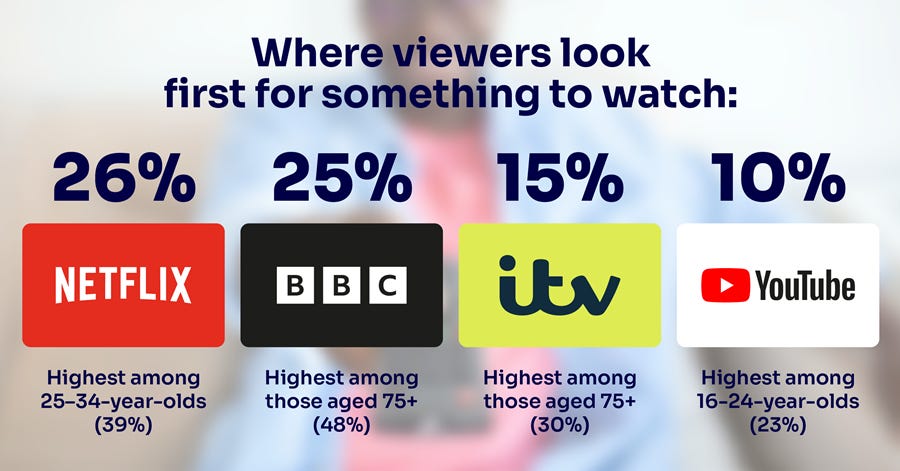
Netflix has narrowly become UK audiences’ first port of call. According to Ofcom’s latest Media Nations report, 26% of UK viewers in 2025 said the streamer is where they turn to first when thinking about what to watch, ahead of the BBC on 25% and well up on ITV (15%) and YouTube (10%). The figures mark a shift from the prior year, which was 28% for the BBC and 23% for Netflix, although an Ofcom spokeswoman said there have been some changes in methodology so these numbers are indicative only. Broken down by age, the figures shift vastly, with 36% of 16-24 year olds opting for Netflix first over just 14% for the BBC. At the other end of the age scale, 5% of over-75s choose Netflix first while 48% switch on the 100-year-old national broadcaster. (Ofcom)
💡The generational divide is becoming the defining factor in the streaming transition, with younger audiences building their viewing habits around global platforms rather than legacy broadcasters.
TikTok Is Testing a Rival to Amazon Prime As It Looks to Create a US E-Commerce Giant.
TikTok is testing a new subscription-based shopping membership in the U.S. that mirrors Amazon Prime. Called TikTok Shop Plus, the programme offers members benefits including free shipping, product discounts, and exclusive coupons. The company is testing different price points, reportedly ranging from $6 to $15 per month, with selected users seeing discounts on products such as beauty and hair care items alongside faster shipping options. The move is part of TikTok’s broader push to expand TikTok Shop into a larger e-commerce platform. The membership model follows a strategy used by Amazon, Walmart, and other retailers to encourage repeat purchases and build customer loyalty. TikTok has been investing heavily in commerce capabilities as it looks to keep shopping activity within its own ecosystem rather than losing product discoveries to external marketplaces like Amazon. TikTok Shop Plus is currently only being tested with a limited group of U.S. shoppers, and the company has not announced a wider rollout or finalised pricing. (Business Insider)
💡The next phase of social commerce is moving from inspiration to retention, as platforms look for ways to turn fleeting moments of discovery into long-term consumer relationships.
Arizona State University Launched a Content Creation Degree.
With a new content creation major under the school’s journalism and communication department, students at ASU can learn how to become influencers in class. As more young people create their own online presence, the programme aims to give students the groundwork “to become an influencer and strategic storyteller” to monetise their social media platforms like a business. As part of the curriculum, students would spend time planning content, producing videos and podcasts, and learning all about personal branding. Other universities have resources to help train students in content creation, like Syracuse University’s creator economy minor that focuses on content creation, digital entrepreneurship, and social media monetisation - but ASU is the first to make it a whole major. (The College Fix)
💡The creator economy is moving from an informal career path into an established professional field, with education institutions beginning to treat content creation as a business discipline. Will European universities follow suit?
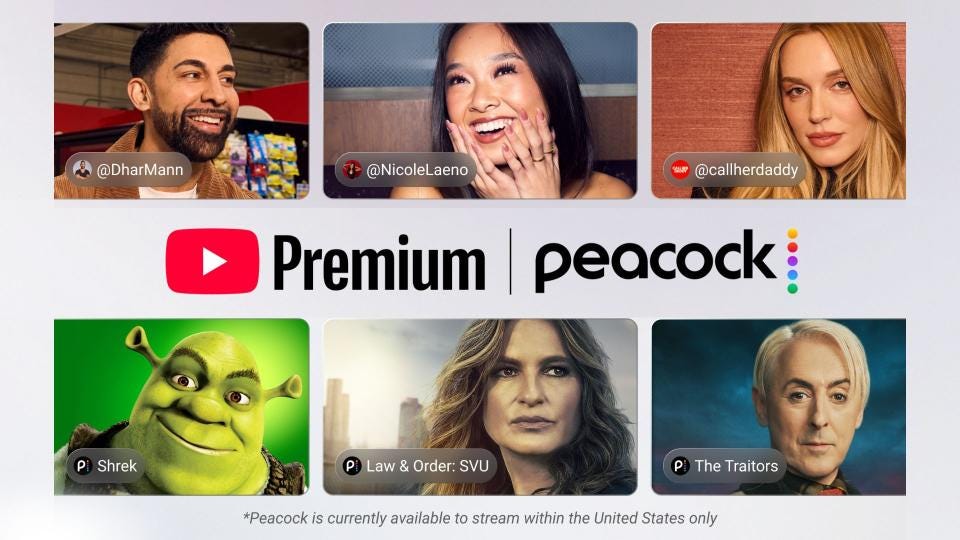
NBCU, YouTube Sign Wide-Ranging Deal to Expand Carriage of Peacock, Hayu, Universal+.
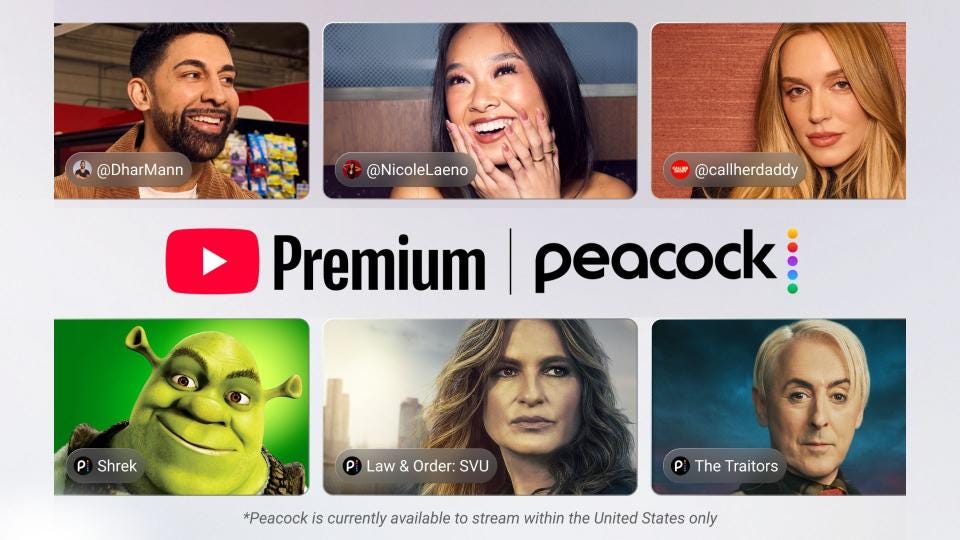
NBCUniversal and YouTube have signed a multi-year strategic partnership that will expand the distribution of Peacock and other NBCUniversal streaming services across YouTube’s platforms. Starting in early 2027, Peacock Premium will be included as part of YouTube Premium subscriptions in the U.S., giving subscribers access to NBCUniversal content including movies, original series, and live sports such as the NFL, NBA, Olympics, and Premier League.
The agreement also expands the international reach of NBCUniversal’s streaming services Universal+ and Hayu through YouTube Premium in selected markets. In addition, NBCUniversal and YouTube will continue their existing distribution partnership with YouTube TV, while NBC Sports will produce select live sporting events for YouTube and stream certain events through the NBC Sports YouTube channel. The deal represents Peacock’s largest wholesale distribution partnership to date and brings together YouTube’s subscription ecosystem with NBCUniversal’s entertainment, sports, and film portfolio. (NBCU)
💡The streaming wars are evolving into a distribution game, with platforms increasingly relying on partnerships and bundles to reach audiences rather than competing solely through standalone subscriptions.
HBO Max Dips Toe Into Vertical Video With ‘HBO Max Shorts’.
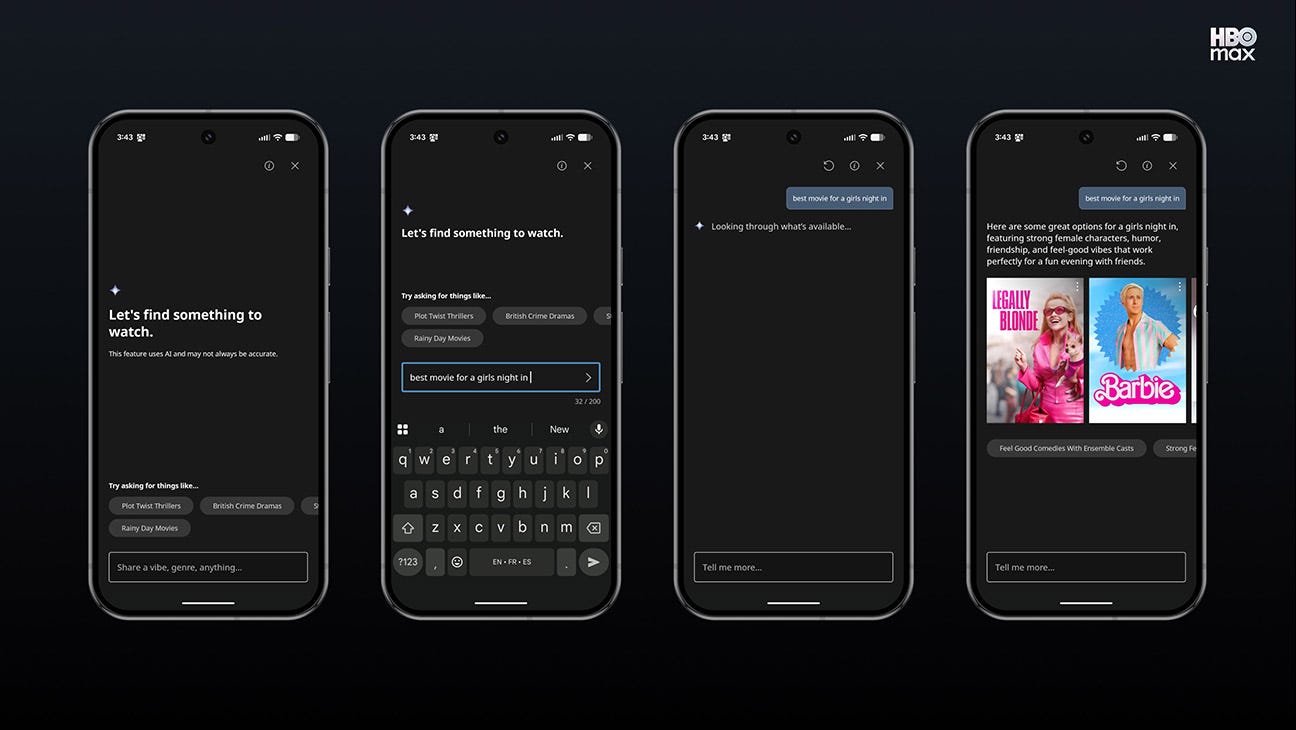
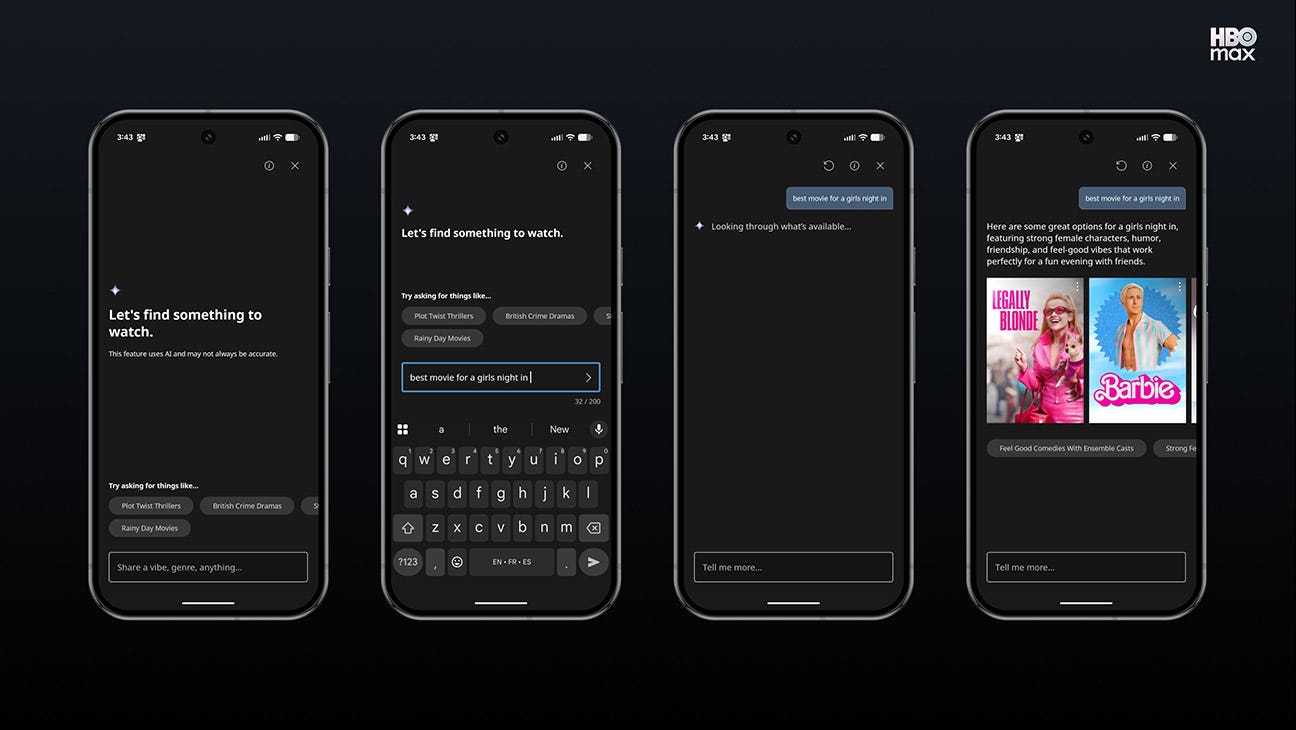
HBO Max is testing a new vertical video feature called HBO Max Shorts, introducing a TikTok-style scrolling feed within its app to help users discover content from the platform’s library. The feature includes trailers, clips, and bonus material, with recommendations personalised based on viewers’ watch history. Users can move directly from a clip to the full movie or series or save titles for later. The feature is initially available to select iOS users in the U.S., with plans to expand to additional devices and markets. The short-form feed is powered by a combination of artificial intelligence and human curation. An in-house machine learning tool analyses scene-level metadata across HBO Max’s catalogue to identify potential high-impact moments, which editors then review and adapt into vertical clips. Warner Bros. Discovery is also testing an AI-powered conversational search feature, allowing users to search for content using natural language requests rather than traditional keywords or titles. The new features are part of HBO Max’s broader efforts to improve content discovery within the streaming platform. (The Verge)
💡The rise of vertical feeds inside streaming apps shows how the worlds of entertainment and social media are converging around audience attention, as platforms rethink discovery formats to compete with the habits shaped by short-form video.
🧠 Strategy Spotlight: Netflix Challenges BBC’s TV Dominance
For almost a century, the BBC has been one of the defining institutions of British television. It has shaped viewing habits, launched cultural moments, and served as a default destination for audiences deciding what to watch.
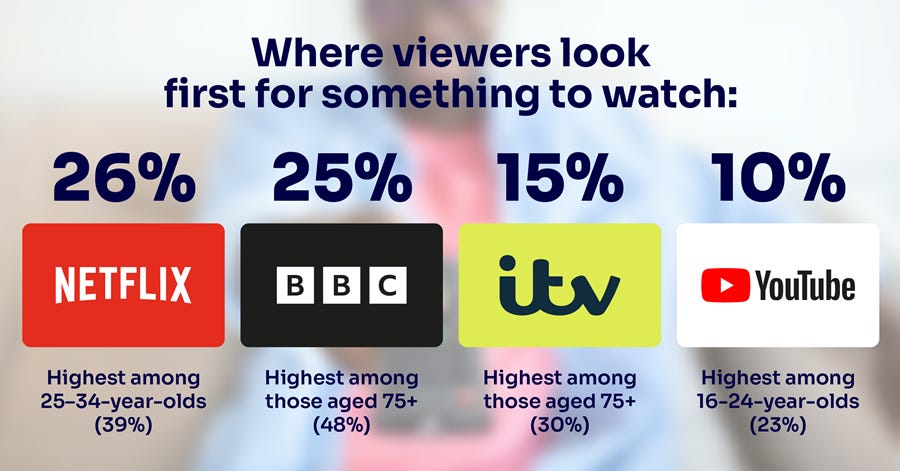
But new data from Ofcom’s latest Media Nations report shows a significant shift in how UK audiences begin their viewing journey. In 2025, Netflix became the first place viewers turn to when deciding what to watch, narrowly overtaking the BBC for the first time.
According to the report, 26% of UK viewers said Netflix is their first destination for choosing entertainment, compared with 25% for the BBC.
ITV followed with 15%, while YouTube accounted for 10%. While the difference between Netflix and the BBC is small, the direction of travel highlights a broader change in audience behaviour.
The Battle Has Moved to Discovery
The significance of the shift is not simply that Netflix has gained a one-point lead. The bigger change is happening before audiences even press play.
For decades, broadcasters controlled the starting point of television. Viewers turned on their TV sets, browsed channels, and discovered programming within an environment largely shaped by broadcasters. Today, that journey increasingly begins with platforms that use algorithms, recommendations, and personalised interfaces to guide viewing decisions.
The companies that influence what audiences choose to watch are gaining a new form of power.
Discovery has become a key part of the television experience - and increasingly, a competitive advantage.
A Generational Divide
The Ofcom data also highlights a significant generational shift. Among 16–24-year-olds, Netflix is the clear first choice, with 36% saying they turn to the streamer first when deciding what to watch. Only 14% in this age group choose the BBC as their starting point.
At the other end of the spectrum, traditional broadcasters remain much stronger. Among viewers aged 75 and over, 48% still choose the BBC first, compared with just 5% for Netflix.
The numbers suggest that the future relationship between audiences and television may look very different depending on age.
Younger viewers are growing up with platform-led discovery, while older generations continue to rely on established broadcasters.
What This Means for Television
The shift does not mean that broadcasters are losing their relevance overnight. The BBC remains one of the most trusted and widely used media organisations in the UK, with a significant cultural role and a large audience.
However, the challenge for traditional broadcasters is evolving. Competition is no longer only about producing great programmes or securing exclusive content. It is also about owning the moment when viewers decide what they want to watch.
Netflix’s rise as the UK’s first choice for entertainment discovery reflects a wider transformation across the media industry:
Audiences are increasingly navigating television through platforms rather than channels.
🎯 When Reality TV Meets the Creator Economy
Yesterday, I came across a LinkedIn post that sparked my interest: “Love Island needs to lose the influencers.”
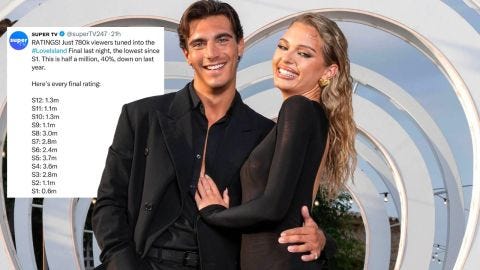
The argument was that Love Island was once a show that created influencers - but now it increasingly casts people who already understand the mechanics of attention, personal branding, and social media performance.
The timing is interesting. The latest season finale reportedly attracted its lowest live audience since season one, with 780,000 viewers tuning in live and 1.1 million watching across catch-up. While viewing habits have clearly shifted from live television to streaming, the decline has raised questions about whether the format itself is losing some of what made it compelling.
The criticism is not that creators should not appear in entertainment. Quite the opposite - creators have become an important part of modern media. But the question is what happens when participants enter a reality format already thinking about the audience, the clips that will go viral, and the personal brand they can build afterwards.
And this is not only a Love Island conversation. I recently realised I can’t even watch Kaulitz & Kaulitz (who have increasingly become personal brands beyond music) season three because season two already felt too constructed.
The moments that once made reality TV feel unpredictable started to feel increasingly shaped for the camera.
Reality TV has always involved production, editing, and storytelling. But the creator economy has changed the relationship between participants and audiences. Viewers are becoming more sensitive to when they feel they are watching genuine moments versus carefully managed ones.
So the question becomes: can Reality TV formats built around authenticity survive in an era where everyone understands how attention works?
Love Island used to create influencers. Now it casts them.
☀️ Weekend Vibes
If something sparked a thought, or you think a friend would enjoy this, hit reply or forward it along. Sandra x
Please feel free to reach out to me if you would like to discuss this further or if you have any questions: sandra@tvfuturist.com or connect with me on LinkedIn.